
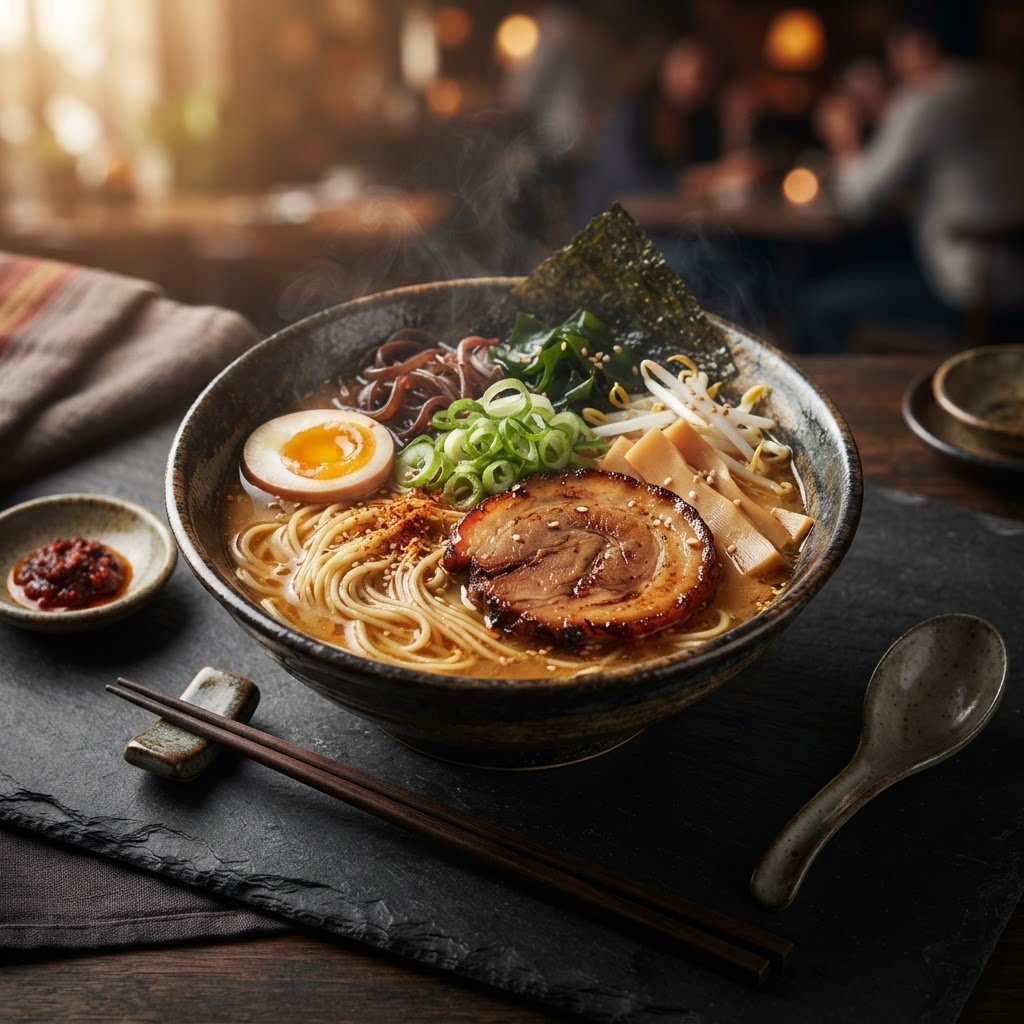
Slow-Braised Miso Ramen Shoulder with Silk Noodles
This is ramen in its slow Sunday form: a deeply savory braise that turns humble noodles into the centerpiece of the table. Built for the current ramen moment’s nostalgic, comfort-first energy, it leans cozy and familiar but finishes with a restaurant-level gloss and precision.
Step 1: Heat the oven to 325°F. Pat the pork shoulder dry and season lightly. In a Dutch oven, heat the neutral oil over medium-high and sear the pork well on all sides until deeply browned, about 8 to 10 minutes total. Transfer to a plate.
Step 2: Lower the heat to medium. Add the sliced onion, smashed garlic, and ginger to the pot and cook until fragrant and lightly softened, about 3 minutes. Stir in the miso, soy sauce, mirin, sake, water, chicken stock, brown sugar, and rice vinegar, scraping up the browned bits.
Step 3: Return the pork to the pot, nestling it into the liquid. Bring to a simmer, cover, and braise in the oven for about 2 1/2 to 3 hours, turning once halfway through, until the pork is spoon-tender.
Step 4: Remove the pork and shred it into large rustic pieces. Strain the braising liquid if you want a cleaner, more refined bowl, then return the liquid to the pot and simmer uncovered for 10 to 15 minutes to concentrate it into a glossy broth.
Step 5: Meanwhile, cook the ramen noodles according to package directions. In a separate pan or in the last few minutes of braising, quickly blanch the bok choy until just tender and soft-boil the eggs for 6 1/2 minutes, then cool, peel, and halve them.
Step 6: Stir the toasted sesame oil into the broth. Divide the noodles between two bowls and ladle the broth around them. Arrange the shredded pork, bok choy, and halved eggs on top. Finish with scallions, sesame seeds, torn nori, and a small spoonful of chili crisp.
Crisp cucumber salad with rice vinegar and sesame
A dry sake or a cold Japanese lager
Contains gluten, soy, and egg. Can be made dairy-free as written.