
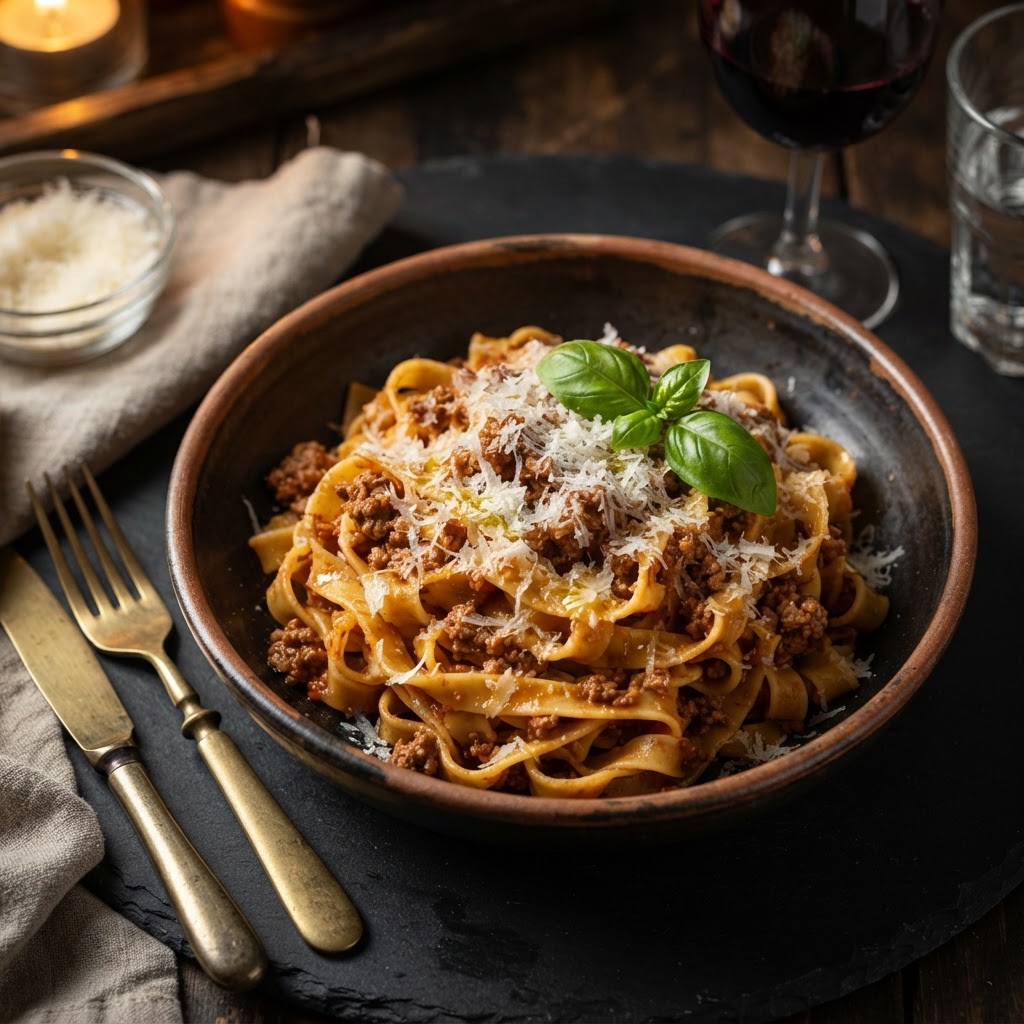
Tagliatelle alla Bolognese with Parmigiano Snow
This is the Bolognese you make when you want depth, patience, and a little theater at the table. Slow-simmered soffritto, a traditional mix of meats, wine, and milk create a sauce that is velvety, savory, and unmistakably Northern Italian—finished with glossy ribbons of tagliatelle and a final drift of Parmigiano.
Step 1: Build the soffritto. In a heavy Dutch oven or wide heavy-bottomed pot, heat the olive oil and butter over medium-low heat. Add the onion, carrots, and celery with a small pinch of the kosher salt. Cook slowly for 12 to 15 minutes, stirring often, until the vegetables are very soft, sweet, and collapsing but not browned.
Step 2: Render the pancetta. Add the pancetta and cook for 5 to 7 minutes, stirring, until the fat has rendered and the pancetta is fragrant and lightly golden.
Step 3: Brown the meats properly. Add the ground beef, veal, and pork. Increase heat to medium. Break the meat up finely with a wooden spoon and cook 10 to 12 minutes until the moisture cooks off and the meat begins to sizzle and lightly caramelize. Season with the remaining kosher salt and black pepper.
Step 4: Concentrate the tomato. Stir in the tomato paste and cook for 2 to 3 minutes until it darkens slightly and smells sweet and toasty rather than raw.
Step 5: Deglaze with wine. Pour in the white wine and scrape up every browned bit from the bottom of the pot. Simmer until the wine is almost completely reduced, about 8 to 10 minutes.
Step 6: Add milk in the traditional style. Pour in the milk and add the nutmeg. Simmer gently, uncovered, until the milk is mostly absorbed into the meat and the sauce looks rich rather than loose, about 15 to 20 minutes.
Step 7: Long simmer for depth. Add the chicken stock, beef stock, bay leaf, and Parmesan rind. Bring just to a bare simmer, then reduce heat to very low. Cook uncovered for 1 hour 30 minutes to 1 hour 45 minutes, stirring every 15 to 20 minutes. The sauce should burble lazily, never boil aggressively. Add a splash of water or stock if it tightens too much; the final texture should be spoonable, concentrated, and silky, not watery.
Step 8: Refine and finish the ragù. Remove the bay leaf and Parmesan rind. Taste and adjust with more salt and pepper if needed. For a more refined restaurant texture, press some of the sauce against the side of the pot with a spoon to slightly break down the meat and vegetables while keeping the ragù rustic.
Step 9: Cook the pasta. Bring a large pot of water to a boil and season with the flaky sea salt. Cook the tagliatelle until just shy of al dente according to package timing. Reserve 1 cup of pasta water before draining.
Step 10: Marry sauce and pasta. Transfer about three-quarters of the ragù to a large sauté pan or back into the Dutch oven over low heat. Add the drained tagliatelle and a splash of pasta water. Toss gently for 1 to 2 minutes until the noodles are lacquered. Add the grated Parmigiano-Reggiano and another spoonful of pasta water if needed to create a glossy emulsion.
Step 11: Plate like a trattoria. Twirl the pasta into warm shallow bowls. Spoon a little extra ragù over the top rather than drowning the pasta. Finish with more Parmigiano and a whisper of parsley if using. Serve immediately.
A crisp butter lettuce salad with shaved fennel, lemon, and olive oil, plus grilled ciabatta rubbed with garlic
Barbera d'Alba or a Sangiovese Classico
Contains gluten, dairy, and pork. Not suitable for vegetarian or dairy-free diets.