
The 20-Ingredient Pantry That Cooks Anything
7 minute read | SavorovaS Learn
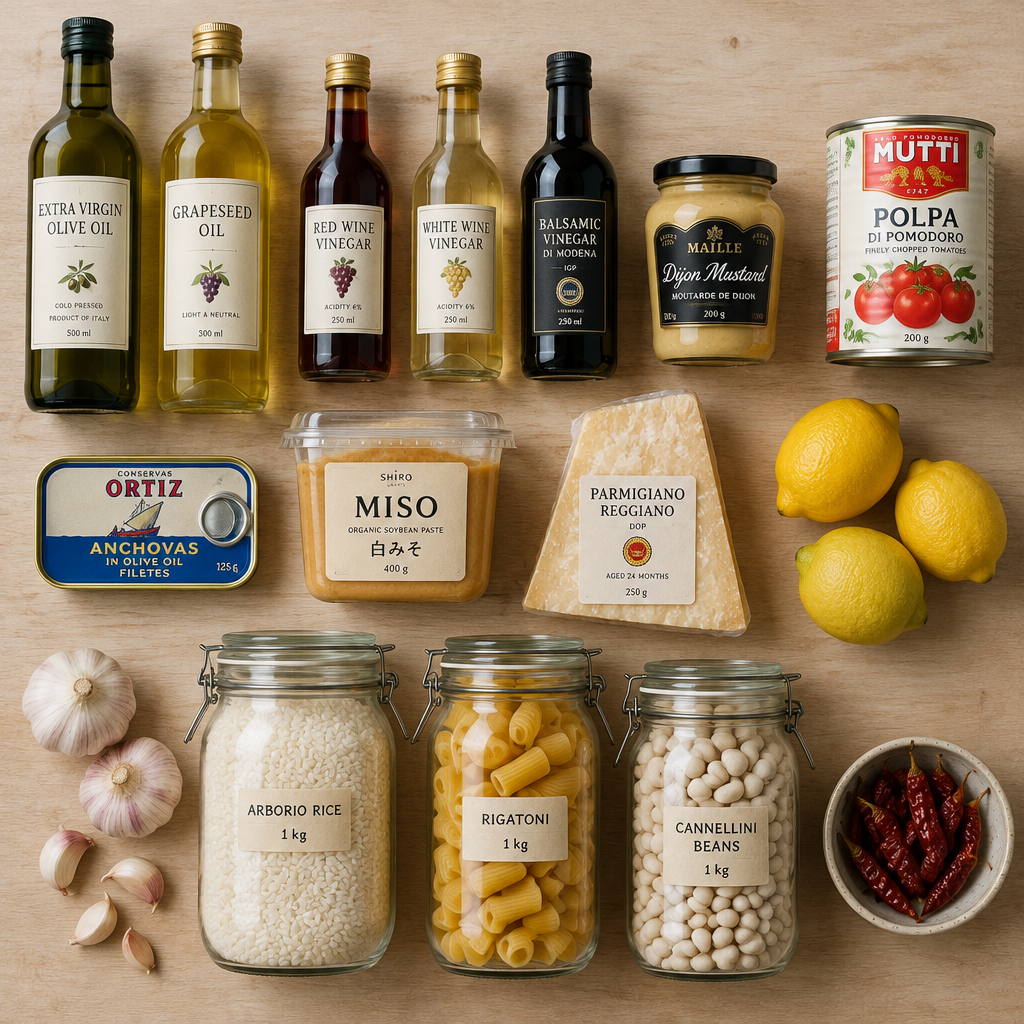
Stock roles, not recipes
Twenty items cover every job a savory dish needs: three fats, four acids, salt, three aromatics, two heats, four umami sources and three starches. Keep those and an empty fridge is not a problem, because each item fills a role instead of belonging to a recipe. Stock roles, and dinner becomes a decision instead of a shopping trip.
A pantry that cooks anything is not a collection of things you like. It is a set of jobs filled. Every savory dish you have ever eaten is some combination of fat, acid, salt, aromatic base, umami, starch and heat, and a pantry covering all seven can improvise in any direction.
That is the difference between this page and a staples list. A staples list tells you what people buy. This tells you what people use, and what each item does when something is missing.
The twenty at a glance
Read the third column as the reason each item earns its space. Nothing on this list is here because a recipe called for it once.
| Item | Job | Unlocks when you are short |
|---|---|---|
| Olive oil | Fat, finishing | A flat soup, finished properly |
| Neutral oil | Fat, high heat | Searing without smoking the kitchen out |
| Butter | Fat, richness | A pan sauce from drippings alone |
| Kosher salt | Salt | Every other item on the list |
| Lemons | Acid, fresh | The last-minute fix for anything heavy |
| Vinegar, cider or rice | Acid, cooking | Pickles, dressings, and deglazing |
| Dijon mustard | Acid plus emulsifier | A vinaigrette that stays together |
| Tinned tomatoes | Acid plus body | A sauce from nothing |
| Onions | Aromatic base | Depth in anything with liquid |
| Garlic | Aromatic base | The difference between plain and cooked |
| Ginger | Aromatic base | Stir-fries, marinades, braises, and the closest stand-in for galangal |
| Black pepper | Heat | A finish on anything rich |
| Dried chile flakes | Heat | Chile oil, and heat without fresh chiles |
| Soy sauce | Umami plus salt | Salt and depth in one pour |
| Tinned anchovies | Umami, deepest | A braise base when there is no stock. Adds fish |
| Miso | Umami, stable | Broth from a spoon and hot water |
| Parmesan | Umami, rind included | Stock, from a rind you would have thrown away |
| Rice | Starch | A meal out of anything in a pan |
| Pasta | Starch | Dinner in twelve minutes |
| Tinned beans | Starch plus body | Protein and bulk with no planning |
Fats: three, because they do different work
Olive oil for flavor and medium heat, a neutral oil for high heat where you do not want the oil talking, butter for richness and for finishing a pan sauce. Butter is the one that turns drippings into sauce, because its proteins and milk solids emulsify the fat and liquid you already have in the pan.
The mistake is treating them as interchangeable. A neutral oil heated until it smokes and then deglazed with wine gives you a harsh sauce, and butter alone cannot take the heat that a hard sear needs.
Acids: four, because they are not interchangeable
Lemon is a finisher: bright, fresh, added at the end. Vinegar is a cooking acid: it goes in early, deglazes, and survives heat. Dijon does double duty, because mustard mucilage holds an emulsion together, which is why a spoonful rescues a dressing that has split.
Tinned tomatoes are acid and body at once, which is why they are the single most useful tinned item in a savory kitchen.
The aromatic base is the engine
Onion, garlic and ginger are the reason a dish tastes cooked rather than assembled, and they are the cheapest way to make a small amount of anything feed more people.
Ginger earns its place on stir-fry and braise duty alone, and it is also the closest thing in a normal cupboard to galangal, the ingredient that most often stops someone cooking a Southeast Asian recipe. The full route to that swap is ginger plus white pepper, which the companion guide sets out, white pepper not being one of these twenty.
Umami is the depth layer
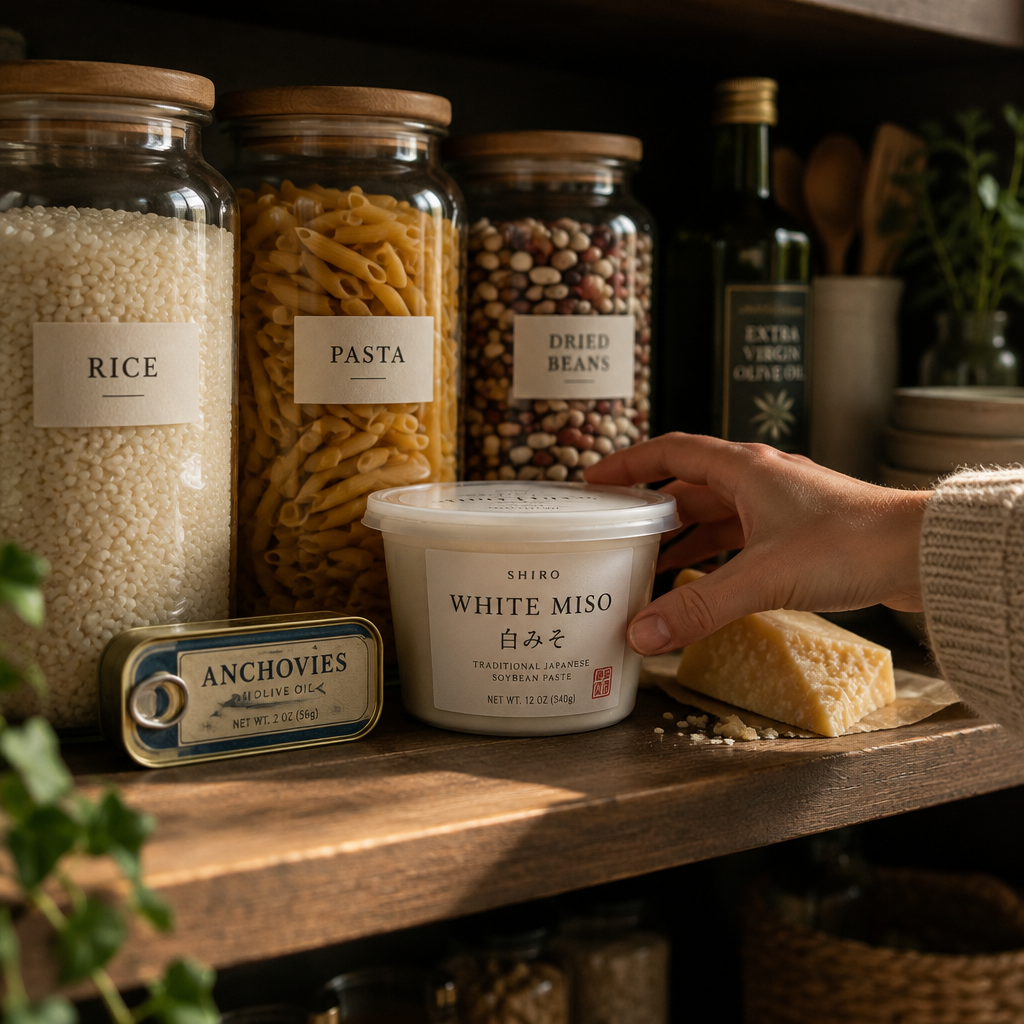
Four sources, and each behaves differently. Soy is umami and salt in one pour, which is why it changes a dish fastest. Anchovies are the deepest and disappear entirely into a braise, leaving only depth, though they do put fish in a dish that may otherwise have had none. Miso is stable and fermented, so it goes in early in braises, or off the heat in soups, where its aroma survives. Parmesan, including the rind, is the one people forget: a rind simmered in water is stock.
Allergens are worth knowing here rather than discovering later. Soy sauce and miso carry soy, anchovies carry fish, parmesan carries dairy, and pasta carries wheat and gluten. Three of the four umami items are also salt, so season after they go in, never before.
Starch and the week's payoff
Rice, pasta and tinned beans are all the same job, which is to turn a pan of something into dinner. Their value is that each one stretches whatever else you have.
A week from these twenty, without shopping again: beans simmered with onion, garlic and tomato on Monday. Pasta with anchovy, chile and garlic on Tuesday. Rice with miso, ginger and whatever vegetable is left on Wednesday. Fried rice with ginger, garlic and soy on Thursday, with any beans left from Monday stirred through. Friday is the braise that uses the vinegar and the anchovies together.
Five dinners, no recipe, no second trip.
When you are one ingredient short
Every item in the table above has a substitution path, and the useful ones are filed by the job they do rather than by name. If what is missing is an acid, the answer is a short list. If what is missing is depth, it is a different list.
The companion guide, Missing an Ingredient, works this way by design, because a cook saying they have no tamarind is really saying they have no acid and fruit, and that is a solvable problem.
Tell the builder what you already have on the shelf and it will build tonight's dinner from the roles you can fill, instead of handing you a recipe that assumes a shop you are not going to make.