The Doneness Guide: Internal Temperatures for Every Protein
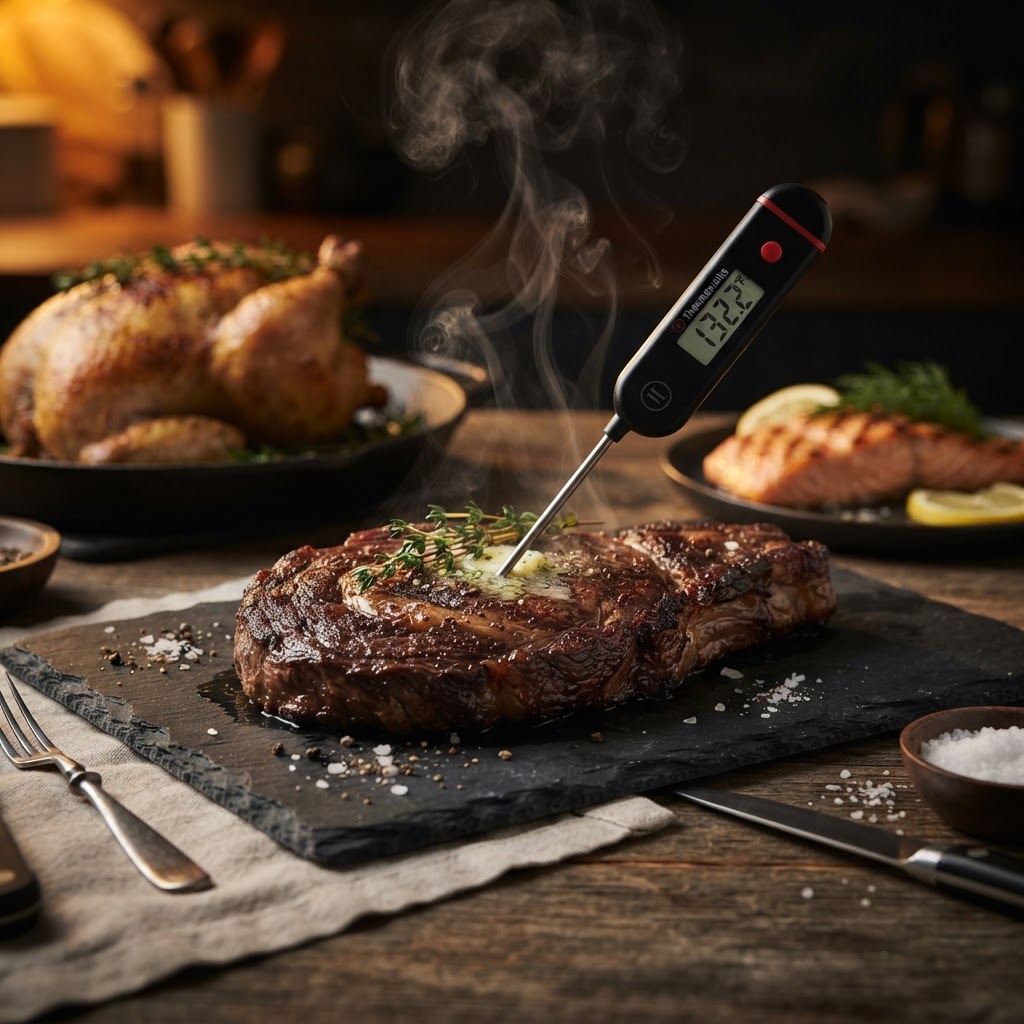
Done is a temperature, not a color
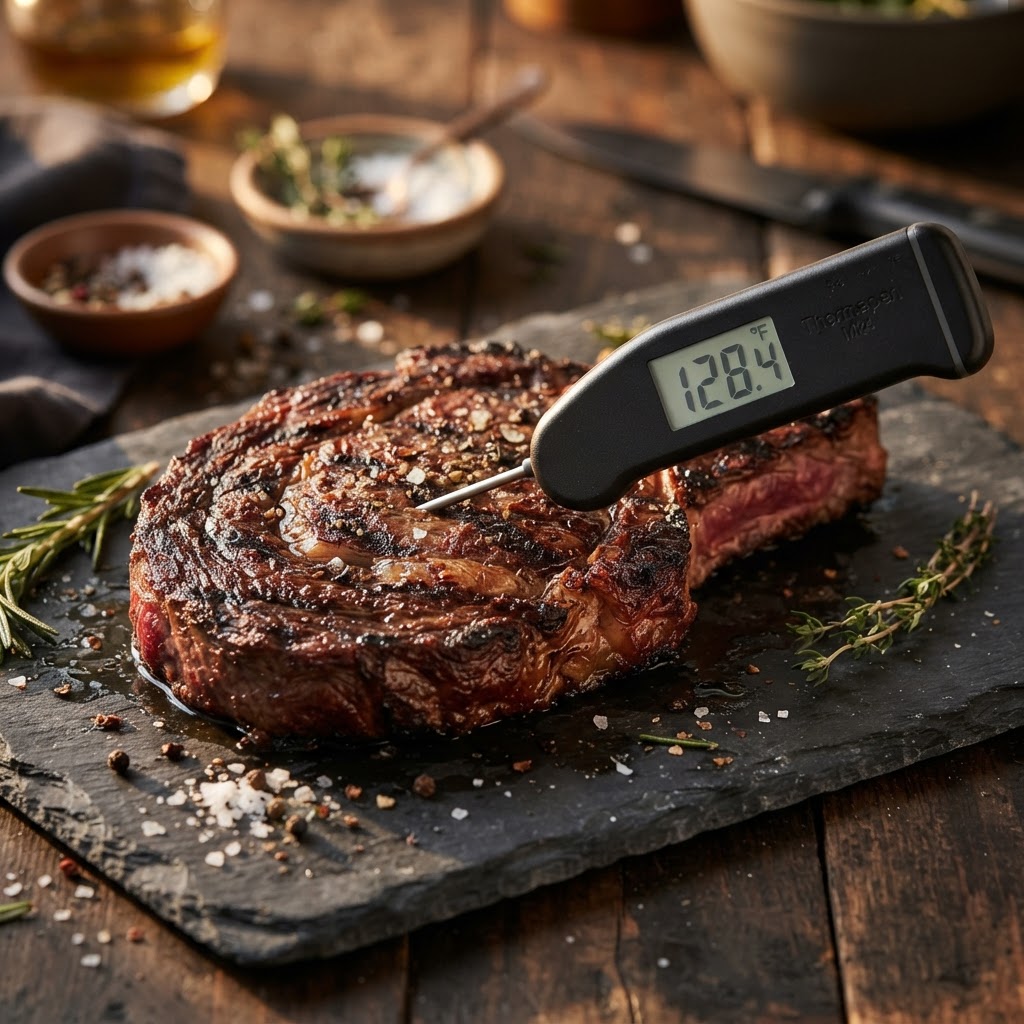
The single biggest upgrade any cook can make is trading the guesswork of color, touch, and time for a probe thermometer. Meat changes state at fixed temperatures: muscle fibers contract and squeeze juice at one range, collagen melts to gelatin at another, and fat renders on its own schedule. None of those events knows what your oven was set to or how long the timer ran. They only know the internal temperature the food reached.
Color lies because it tracks surface chemistry and oxygen, not core temperature. The poke test lies because it tracks the tester's finger more than the meat. A five-dollar probe thermometer is the only instrument in the kitchen that measures the actual thing that decides whether dinner is correct.
Carryover: the cooking that happens off the flame
Heat enters food from the outside in, so the surface is always hotter than the center. When the heat source goes away, the surface's energy keeps moving inward, and the center temperature keeps climbing. That climb is carryover cooking, and it is predictable: a thick steak gains three to five degrees resting, a roast gains ten or more, a piece of fish gains two or three.
The professional habit that follows: pull the food early, five to ten degrees below target for a roast, three to five for a steak, and let the rest finish the job. Resting also lets the muscle fibers relax and the juices settle, so the first slice stays juicy instead of flooding the board.
The main chart
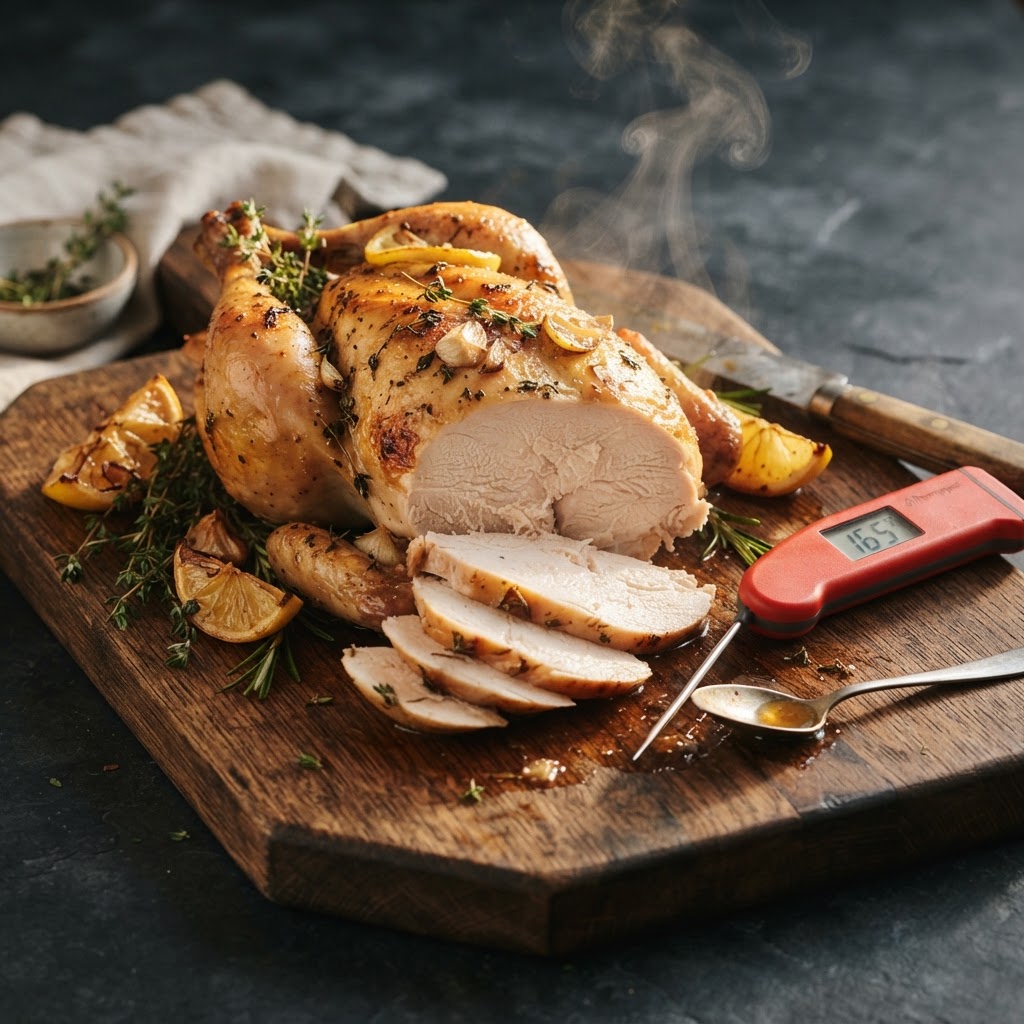
Temperatures are final target temperatures measured at the thickest point. Pull temp is what to remove at, assuming a typical thickness and a ten-minute rest. Rest times are minimums for the juices to settle.
| Protein | Pull at | Final target | Rest | Result |
|---|---|---|---|---|
| Beef or lamb steak, rare | 118-120 | 120-125 | 5 min | Bright red center, cool and soft |
| Beef or lamb steak, medium-rare | 125-128 | 130-135 | 5-10 min | Warm red center, springy |
| Beef or lamb steak, medium | 135-138 | 140-145 | 10 min | Pink throughout, firmer |
| Beef or lamb steak, medium-well | 145-148 | 150-155 | 10 min | Slight blush, firm |
| Beef or lamb roast | 5-10 below target | 130 medium-rare, 140 medium | 15-20 min | Even color edge to edge |
| Pork chop or tenderloin | 138-140 | 145 | 3-5 min | Blush pink, juicy, safe |
| Chicken breast | 162-165 | 165 | 5 min | White but still juicy |
| Chicken thighs or legs | 175-180 | 180-185 | 5 min | Fall-apart tender, no dryness |
| Whole chicken | 158-160 breast, 165 thigh | 165 thigh, 165 breast | 10 min | Juicy white meat, cooked dark meat |
| Duck breast, traditional | 130-133 | 135-138 | 5 min | Rosy, medium |
| Duck breast, USDA standard | 158-160 | 165 | 5 min | Fully cooked |
| Ground beef patty | 160 direct | 160 | none | Fully cooked, still juicy if not pressed |
| Fresh ham | 140 | 145 | 3-5 min | Juicy, blush pink |
| Fully cooked ham, reheating | 135-138 | 140 | 5 min | Warm through, not dried |
The beef and lamb doneness scale
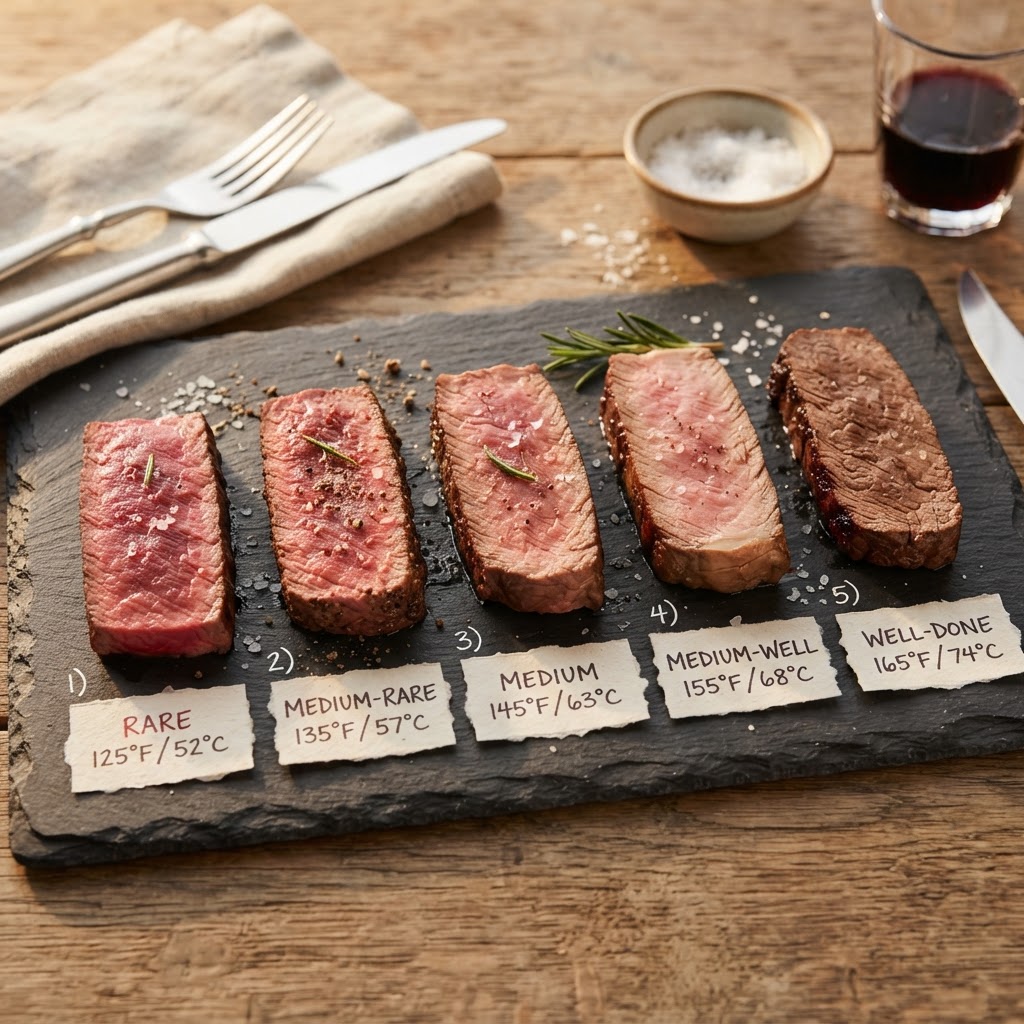
The five-step scale every cook should know by heart, measured in the thickest part after resting.
| Doneness | Temperature | Center color and feel |
|---|---|---|
| Rare | 120-125 F | Bright red, cool center, very soft |
| Medium-rare | 130-135 F | Warm red center, gently springy |
| Medium | 140-145 F | Pink through the middle, firmer |
| Medium-well | 150-155 F | Slight pink, quite firm |
| Well done | 160 F and above | No pink, dense and firm |
Pork: the temperature that changed
For decades Americans cooked pork to 170 and beyond, and dry pork chops were the norm. The old rule existed for one reason: trichinella, a parasite that once made undercooked pork genuinely risky. Decades of modern farming practice and a federal eradication program eliminated trichinella from the commercial US pork supply, and the official consumer standard dropped to 145 with a three-minute rest in 2011. That temperature produces a blush-pink, juicy chop. Ground pork, like all ground meats, still cooks fully. Old habits die hard, but 145 pork is not cutting a corner; it is the corrected number.
Poultry: white and dark are different muscles
The 165 standard for poultry is about the white meat, and it deserves its reputation: chicken breast dries fast past its target. Dark meat is a different muscle built for endurance work, loaded with collagen and fat, and it tastes better cooked well past 165. Thighs and legs cooked to 175 or 185 do not dry out; they get more tender as their collagen melts. The home cook's error is treating the bird as one temperature. It is two: breast done gently, thigh done thoroughly, and a whole bird managed so both land.
Fish: the fastest protein in the pan
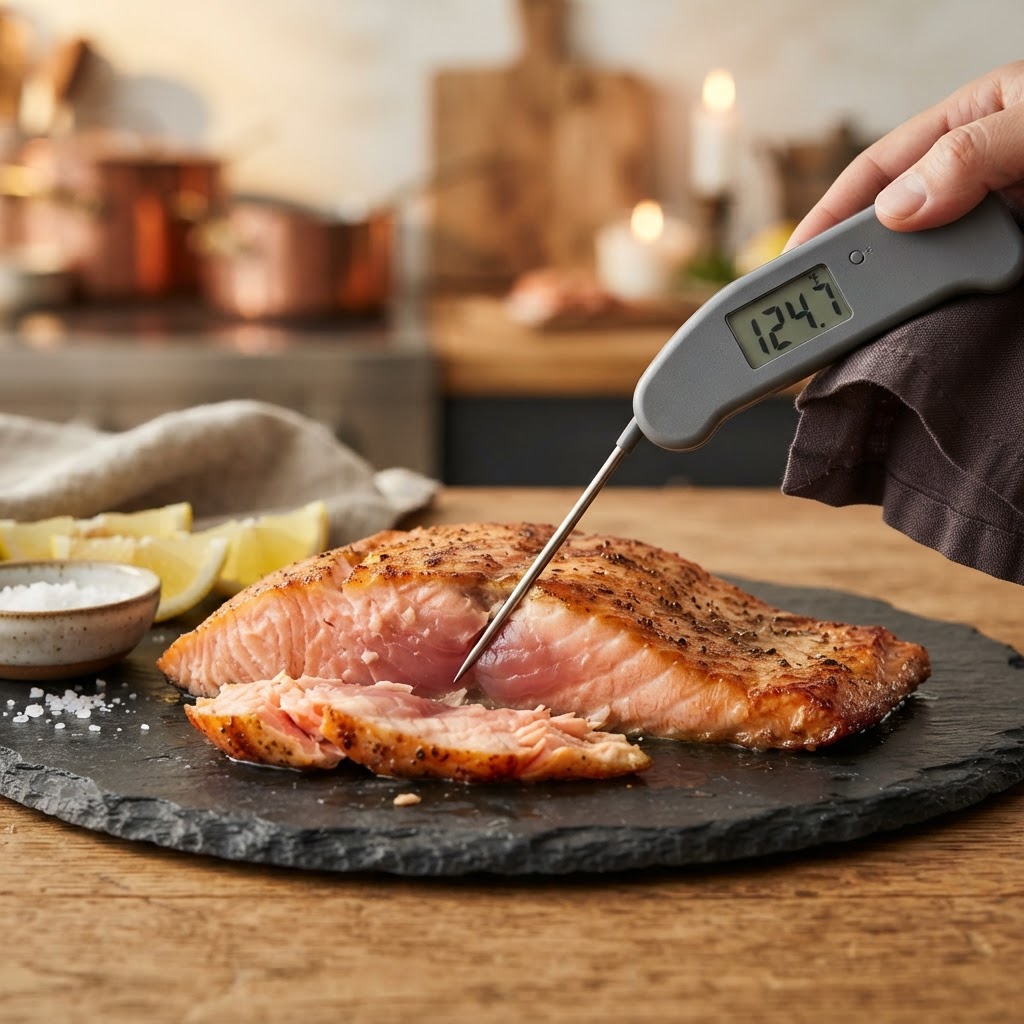
Fish has less collagen than meat, and its muscle fibers contract at lower temperatures, which is why fish goes from perfect to chalk in a minute. It also carries over fast and keeps climbing off heat.
| Fish | Pull at | Result |
|---|---|---|
| Salmon, fatty fish | 125-130 for medium | Translucent center turning to rosy flake; 145 is the fully cooked standard |
| Lean white fish, halibut, cod, snapper | 138-140 | Opaque, just flaking, still moist; 145 is the fully cooked standard |
| Tuna, seared | 80-90 center | Crust outside, cool raw center |
| Shrimp | 135-140 | Opaque, loose C shape; tight curl means overcooked |
| Scallops | 120-125 | Opaque center, springy, no longer translucent |
Tough cuts: doneness is tenderness, not temperature
For brisket, pork shoulder, short ribs, and shanks, the doneness question is different. These cuts are loaded with collagen, and their target is not a pinkness scale but a chemical event: collagen converting to gelatin, which begins in earnest around 160 and completes for most cuts between 195 and 205. The thermometer still matters, but the final word belongs to the probe test: slide the probe in, and when it slides with no more resistance than into warm butter, the meat is done, whatever the exact number says.
| Tough cut | Target range | The test |
|---|---|---|
| Brisket | 200-205 F | Probe slides with no resistance |
| Pork shoulder, pulled pork | 195-205 F | Bone wiggles free, probe slides |
| Short ribs, braised | 195-205 F or 2-3 hours submerged at a bare simmer | Meat yields to a fork with no pull |
| Pot roast | Not a number | Shreds under its own weight |
Two standards, stated once
Consumer temperature standards, used throughout this chart, come from the USDA and are set with a generous safety margin for home kitchens. Commercial kitchens follow the FDA Food Code, which allows some lower temperatures with specified hold times, for example 155 for comminuted meats held for seconds. Home cooks should use the numbers here. Operators should follow their local food code, and when a thermometer question is a safety question, the code wins over any chart, including this one.
SavorovaS is an Amazon Associate. Some links on this page are affiliate links, and we earn from qualifying purchases. We recommend products based on professional kitchen practice, not on commission.
Cook with Savi