Cooking for a Crowd: The Complete Guide to Quantity, Scaling, and Service
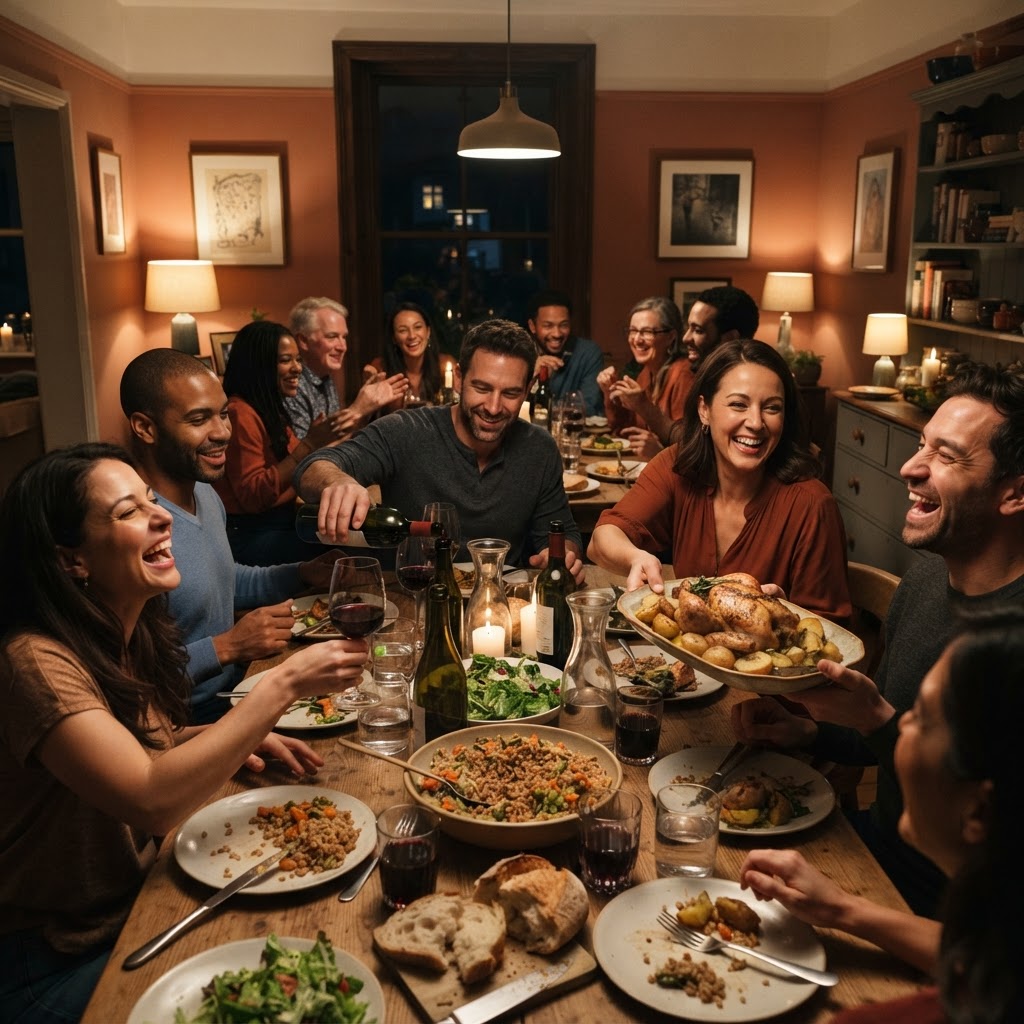
Crowd cooking is logistics, not a bigger recipe
A dinner for four is cooking. A dinner for forty is an operation with a cooking problem inside it. The skills are the same ones this library teaches everywhere, heat control, seasoning, timing, but they are now subordinate to three questions that home cooking never asks: how much does each person actually eat, what changes when a recipe grows, and how does cooked food wait safely for a room full of people to assemble.
Almost every crowd-cooking disaster comes from ignoring one of those three. This guide answers all of them: the quantity math caterers use, the physics of why doubled recipes misbehave, the equipment plan, a backwards timeline that ends with you calm, and the holding temperatures that keep sixty people safe instead of five.
Plan by the numbers
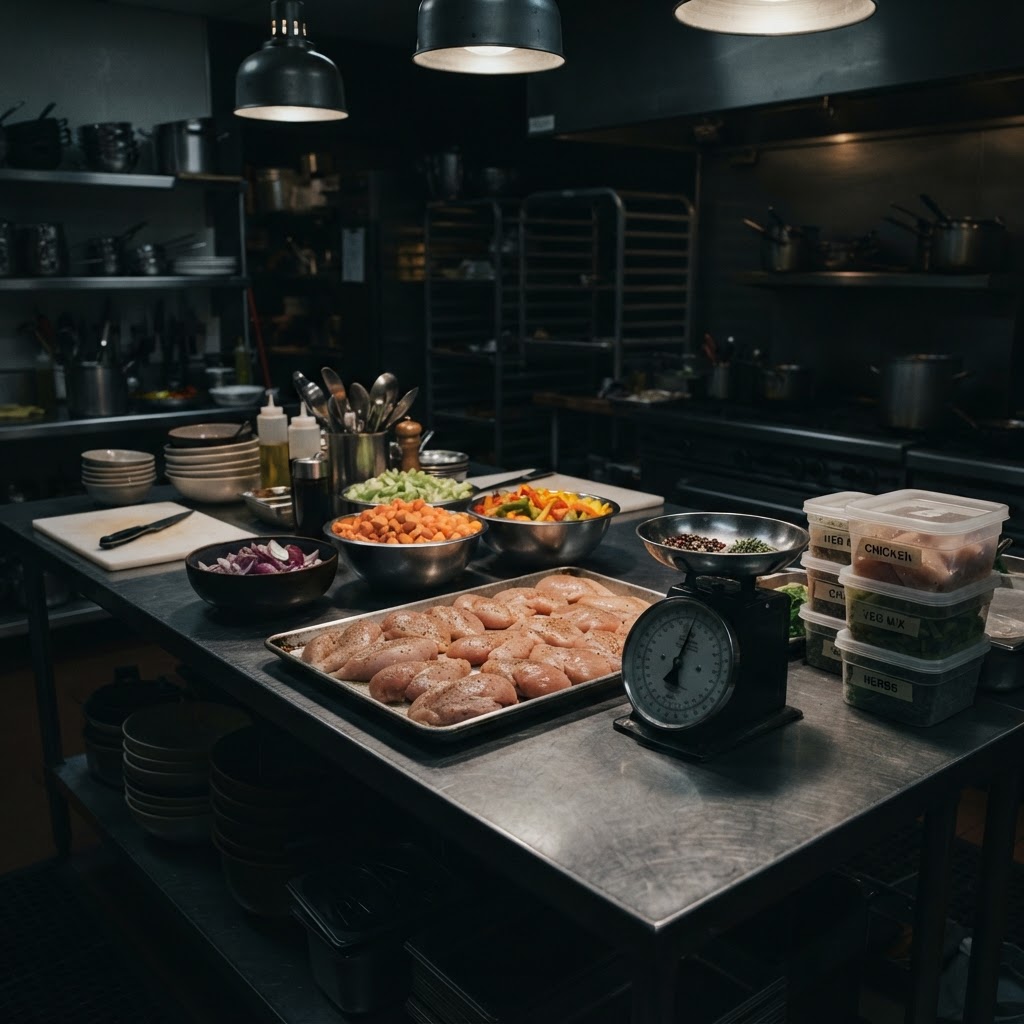
Quantity planning starts from a simple truth: nobody eats a full portion of everything on the table. The more dishes you serve, the smaller each portion becomes. Caterers plan around a total plate weight, not around summing full servings of every dish.
For a single main with two or three sides, the working numbers look like this. Use raw weights; they account for trim and cooking loss before the food ever reaches a plate.
Then adjust for the crowd itself. A lunch crowd eats less than a dinner crowd; an event that starts before a normal mealtime eats less than one after; and any gathering heavy on guests who cooked, restaurant and farm folk famously, will eat you out of house and home. Build a buffer of ten to fifteen percent on the mains, and plan the leftovers you would genuinely eat rather than panicking later.
| Course or item | Plan per person | Notes |
|---|---|---|
| Main protein | 6-8 oz raw | 6 oz with many sides; 8 oz if it is a boneless centerpiece; add 20-25% for bone-in |
| Pasta or grain as a main | 4-5 oz dry | It roughly doubles in cooked weight |
| Starchy side (potatoes, rice, bread) | 3-4 oz raw or 2 oz dry | Rice triples in volume when cooked |
| Vegetable side | 3-4 oz raw | Assume a quarter of it stays behind |
| Salad | 2.5-3 oz raw weight | Undressed; dress at the last minute |
| Dessert | 1 slice or 3-4 oz | One generous item per person covers a crowd |
| Drinks | 2 servings in the first hour, then 1 per hour | Plan nonalcoholic for everyone, alcohol for about half |
Why recipes do not scale linearly
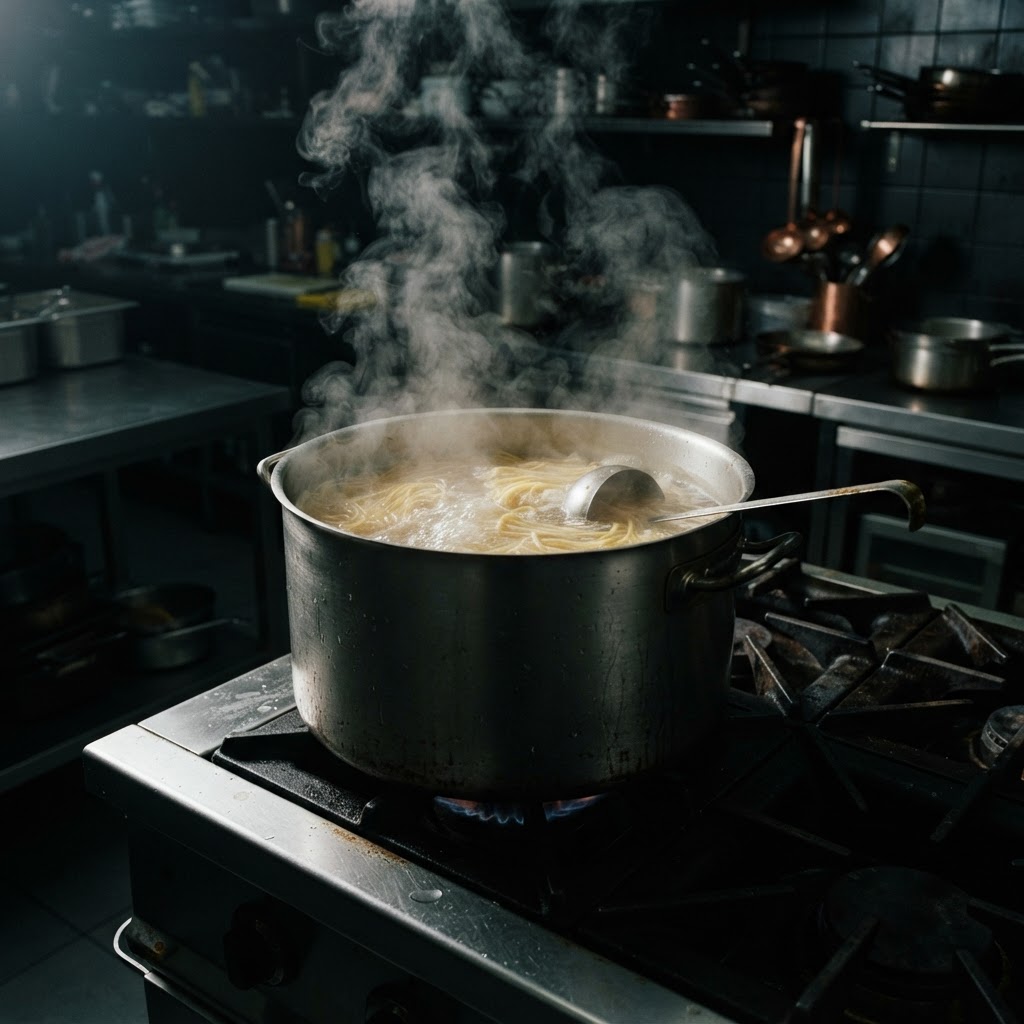
Double every ingredient and you have not doubled the recipe; you have changed the recipe. Geometry is the reason. Cooking time depends on the thickness of the mass, not its weight, and doubling a braise in the same pot doubles the depth of the liquid, which changes how heat reaches the middle. Evaporation scales with the surface area of the pan, not the volume inside it, so a doubled reduction does not take twice as long, it takes longer than twice, and a wide, shallow pan reduces faster than a deep one even at the same setting.
Seasoning misbehaves in its own way. Salt is not about the amount of food alone but about concentration, and as volume grows, taste perception does not scale one to one. The professional habit is to season in stages and taste constantly, holding back the final adjustment until the dish is at serving concentration. Spices and aromatics grow more slowly than the base, roughly one and a half times for a doubled batch, because they compound. Acids finish at the end, off the heat, a little at a time.
The practical rules: cook by internal temperature and texture rather than the original timer; split big batches across pans of similar depth to the original rather than one giant one; and expect a doubled recipe to need roughly one and a half times, not twice, the original time when the pan geometry is unchanged. A probe thermometer ends the guessing, and it is the single most important tool in quantity cooking.
Equipment and oven math
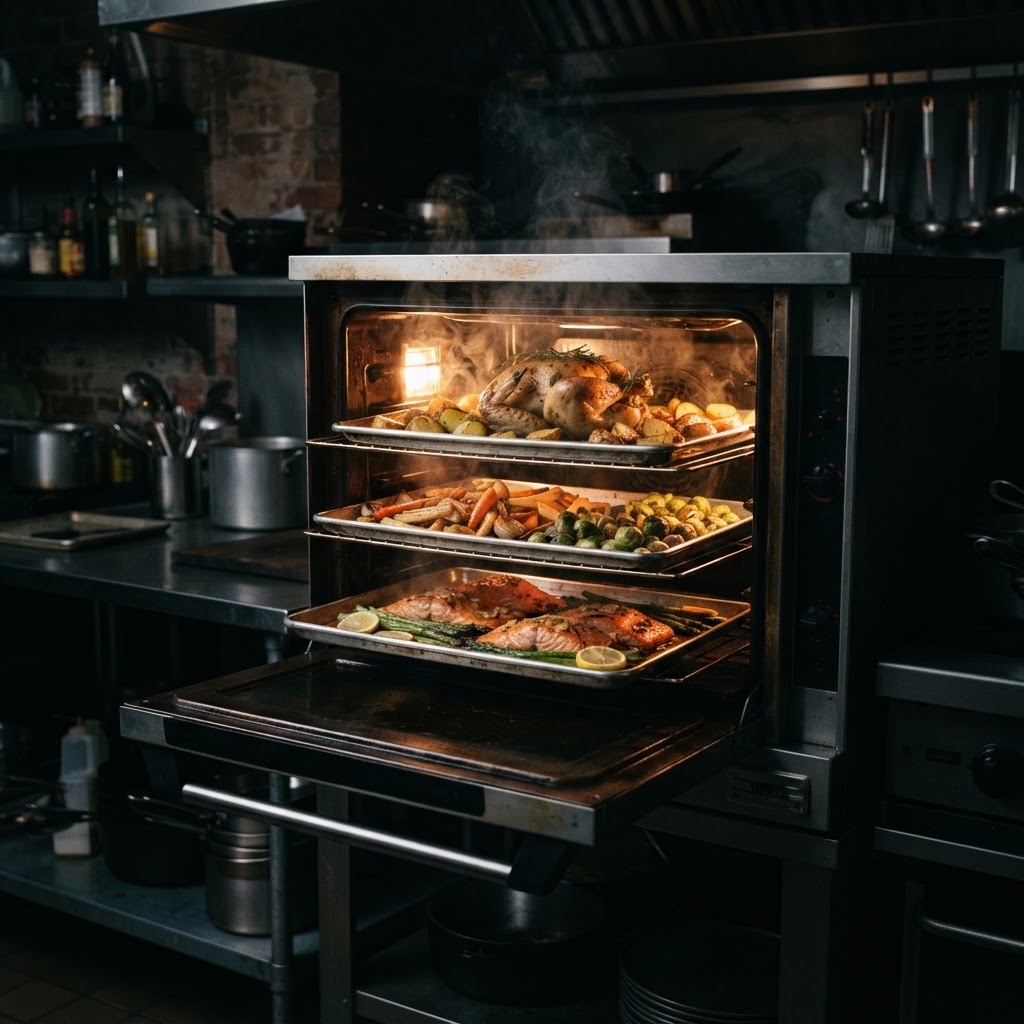
The home kitchen has three choke points when a crowd arrives: burner space, oven space, and cold space.
Burners: a large stockpot can do the work of three saucepans, and braises, boils, and blanched-everything live happily in one pot. Think in stations, a pasta station, a sauce station, a holding station, rather than in dishes.
The oven is the real bottleneck, because cubic feet cannot be improvised. A standard residential oven realistically holds six half-sheet pans on three racks, and every added pan lengthens the cook for all of them by stealing heat and blocking airflow. Rotate racks halfway, stagger the pans for air gaps, and if the menu needs more oven than the oven has, move part of the menu to stovetop, grill, or the make-ahead column. Choose oven mains that share a temperature: a tray of roasted vegetables, a covered braise, and a pan of rolls can coexist at 375; a pizza at 550 cannot share the hour with anything gentle.
Cold space is the choke point nobody plans for. Every make-ahead dish needs refrigerator shelf space in its serving container, and coolers with ice can be pressed into service as overflow refrigeration. Label everything with the dish and the day, because on event morning, unlabeled containers are lost time.
The backwards timeline
Write the plan from the end: guests eat at seven, so the last thing comes out of the oven at seven, so the first thing goes in at five-forty-five, so the braise is done by four and resting, so the braise started at noon. Caterers work this way because forwards planning always forgets that the cook also has to shower, set the table, and open the door.
Sort the menu into three columns. Make ahead: braises, soups, stocks, dressings, dessert components, and anything served cold or reheated hold from hours to a day before, and most improve, because flavors marry and the day-of work shrinks. Day-of but passive: rice, grains, roasted vegetables, things that cook untended. Last hour: anything with a crust, a sear, or a green color, and anything dressed or garnished, because those things wait for no one.
Then protect the last hour like a reservation. Nothing new gets invented in it; it is only assembly and heat. A written list on the counter, in order, beats every good intention. And schedule the cook a fifteen-minute sit before guests arrive; a calm host seasons better than a frantic one.
Holding and safety: the part that keeps people well
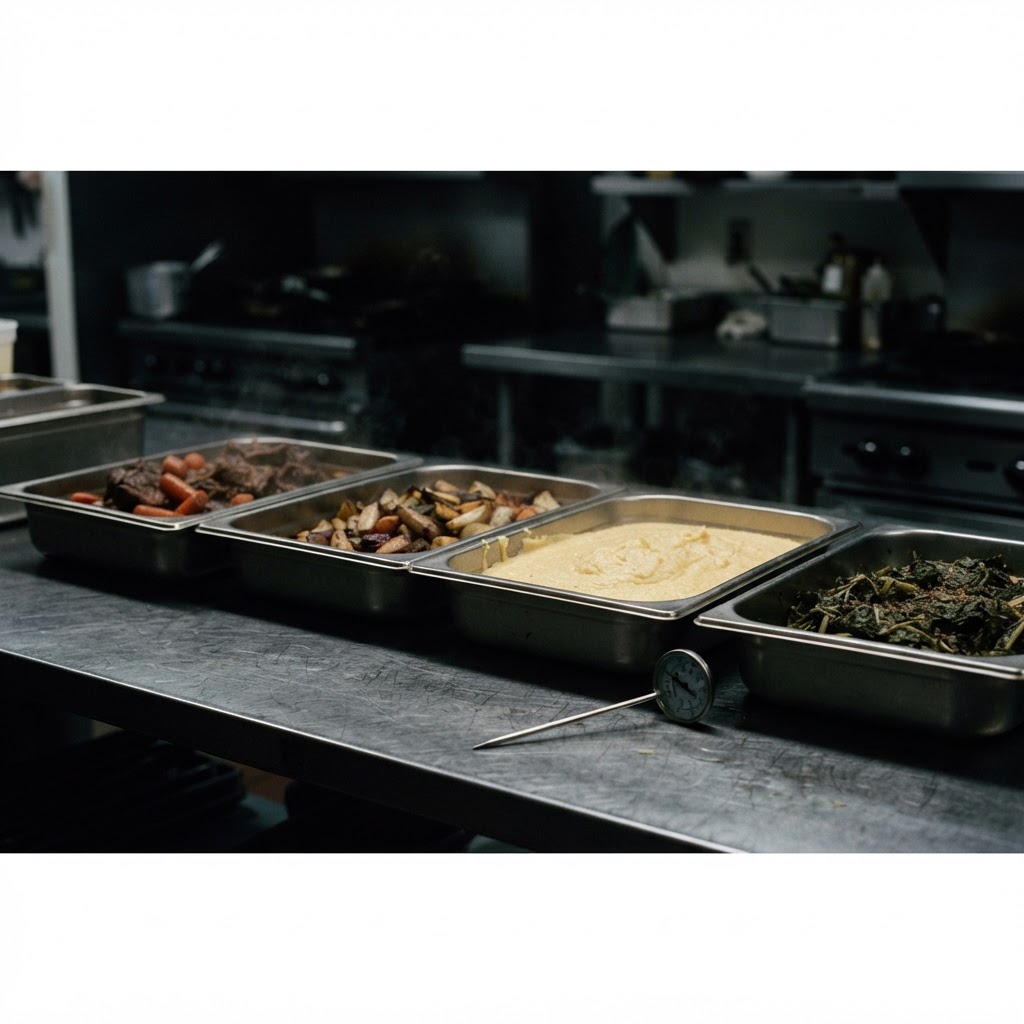
Quantity food goes wrong in the wait, not the cooking. The danger zone is the range in which bacteria multiply fast: the USDA describes it as 40 to 140 degrees Fahrenheit, and the FDA Food Code draws it as 41 to 135. Either way, the rule is the same: hot food stays hot, cold food stays cold, and nothing sits in between for long.
Hot holding: soups, braises, and casseroles hold above 140 degrees, in a warm oven, on a burner at a bare simmer, or in chafing dishes or slow cookers. A probe reading in the thickest part of the pan is the check; steam is not evidence. Chafing dishes hold, they do not cook: food must already be hot when it goes in.
Cold holding: salads and condiments sit on ice or in shallow trays over bowls of ice, and swap trays rather than topping up a warm bowl. The two-hour rule from the USDA applies to the whole event: perishable food that has been above refrigerator temperature for two hours, one hour if the room is above 90 degrees, is discarded, not rescued. Put out smaller portions and refresh them, and the timer resets with each fresh tray rather than running on one big bowl since noon.
Cooking ahead safely: cool hot food fast, uncovered in shallow pans no more than two inches deep, then refrigerate once it stops steaming; deep, covered pots stay warm in the middle for many hours. Reheat in quantity to 165 degrees, stirring or rotating so the whole batch comes up together, then hold hot. A chafing dish is not a reheater; bring food back to temperature in the oven or on the stove first. If anyone in the room is pregnant, elderly, immunocompromised, or very young, cook to the fully-safe temperatures and skip the runny, the raw, and the room-temperature aged things for their portions.
The service line
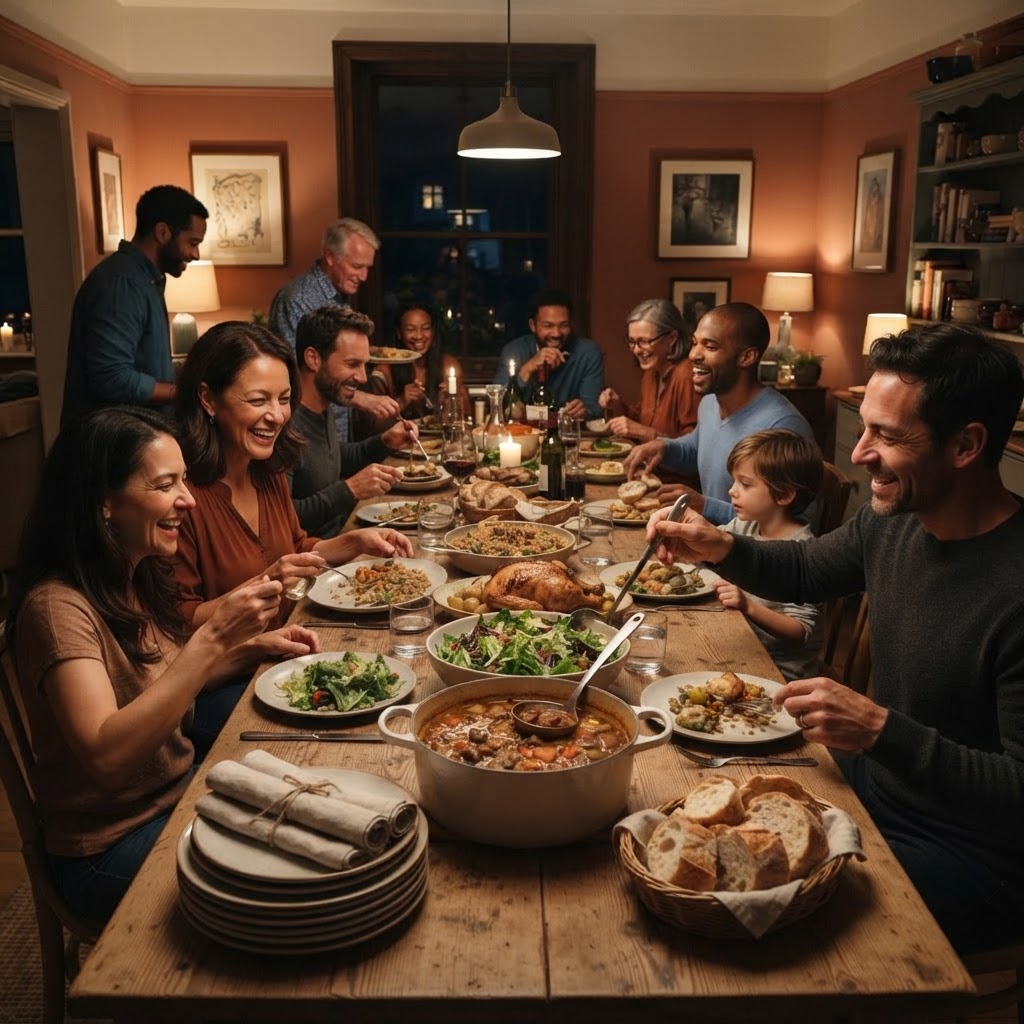
The line is where the plan becomes the party. Set it so people flow, plates start at one end and drinks and napkins stand apart from the food so nobody waits behind a lemonade pour. One serving utensil per dish, resting on a plate, never bare on the cloth, and a small stack of extras for the inevitable swap. Refill in small batches to a half-full pan rather than filling one giant pan at noon; every refresh resets quality and the safety clock together. If any guest could have an allergy, label dishes plainly, and keep the labeled serving spoon with its own dish forever, cross-contamination happens at the spoon, not the platter.
And decide, before the day, what you will not do: not individually plated courses, not a la minute searing for forty, not a menu of six things that all finish in the last ten minutes. Crowd cooking rewards the dish that is finished before the doorbell rings and gets better while it waits. Choose the menu that lets you stand in your own kitchen, in a clean apron, when the first guest arrives, because the host's composure is the last ingredient on the table.
SavorovaS is an Amazon Associate. Some links on this page are affiliate links, and we earn from qualifying purchases. We recommend products based on professional kitchen practice, not on commission.
Cook with Savi