Missing an Ingredient? The Asian Pantry Swap Guide
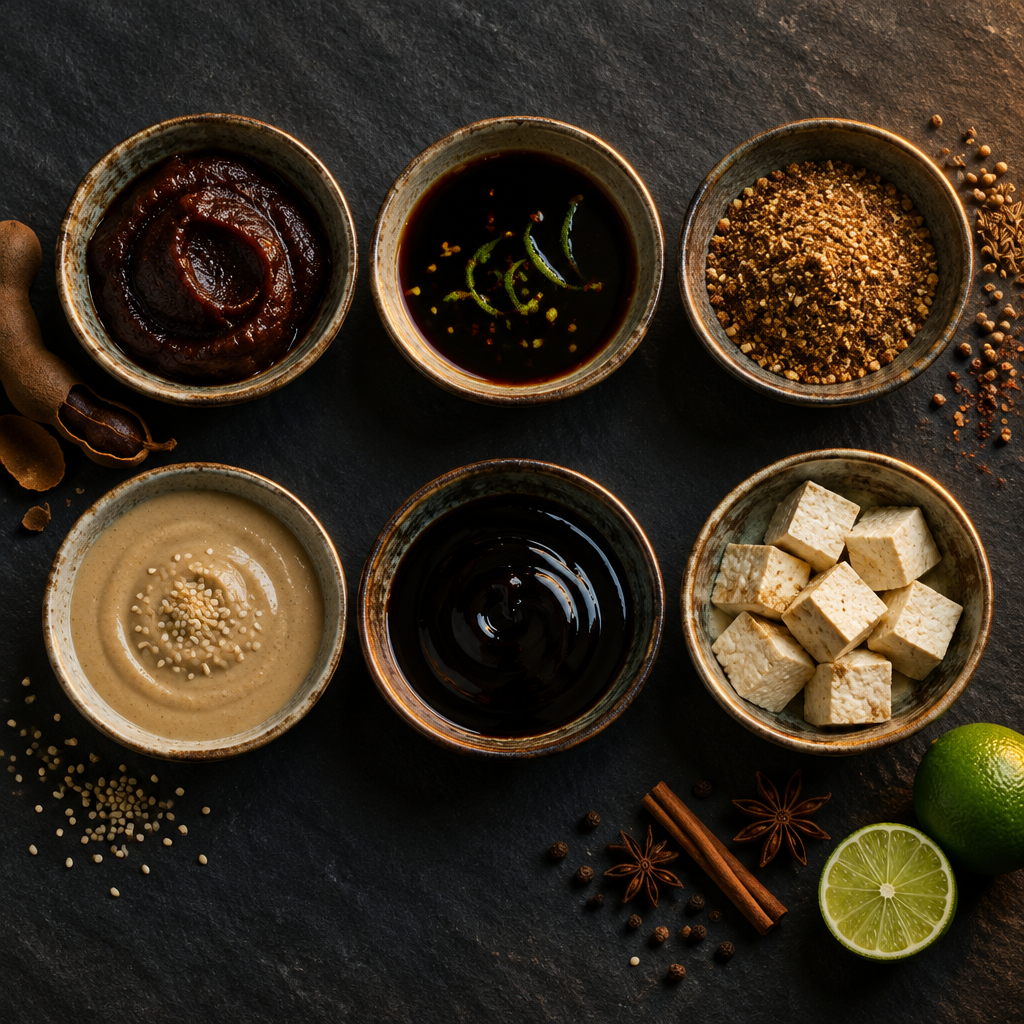
Swap by function, not by name
When an Asian recipe calls for something you do not have, swap by function rather than by name. Match the job first, then check heat stability: yuzu, kaffir lime and ponzu are unstable and belong off the heat, while miso, dashi and gochujang are stable and can go in at the start.
Most substitution charts are organized alphabetically, which is the least useful axis. You do not search for tamarind, you search for the thing tamarind was doing in the dish. Every swap below is filed under the job it performs, so the useful question becomes what am I missing, acid or depth or aroma, and the answer is a short list rather than a hunt.
Each swap carries a flavor match figure so you can see how far you are travelling, and a heat column, which is the part most charts leave out.
Heat stability: the axis most charts miss
This is the insight that decides whether a swap works. Some ingredients carry volatile aromatics that survive almost nothing. Yuzu, kaffir lime leaf and ponzu are the clear cases: cook them and the perfume you swapped for is gone, and you have added acid and salt with none of the point. Add them off the heat, at the end, over the finished dish.
Others are built to be cooked. Miso, dashi and gochujang are fermented or extracted, their character is stable, and they can go into the pot at the start where they build into the sauce. Adding a stable ingredient at the end wastes it. Adding an unstable one at the start wastes the money you spent on the substitution.
| Heat | Ingredients | When to add |
|---|---|---|
| Unstable | Yuzu juice, kaffir lime leaves, ponzu | Off the heat, as a finisher |
| Stable | Miso, dashi, gochujang, fish sauce, soy, tamarind, mirin, rice vinegar | At the start, or during cooking |
| Variable | Kimchi | At the end for texture and live tang; cook it only when you want the flavor and not the crunch |
Acid
Acid is the job you notice only when it is missing: the dish tastes heavy and flat. Swap acid for acid, and add it late whenever the volatile aromatics matter.
| Missing | Use instead | Match | Heat | Watch for |
|---|---|---|---|---|
| Pomegranate molasses | Cranberry juice + sugar + lemon | 75 | Stable | Reduce it down; the sweetness needs cooking off |
| Tamarind paste | Mango powder (amchur) + water | 68 | Stable | Sour but less fruity; start with less than you think |
| Tamarind paste | Lime juice + brown sugar + Worcestershire | 70 | Stable | Worcestershire brings fish |
| Rice wine vinegar | Apple cider vinegar + a pinch of sugar | 82 | Stable | Close enough that nobody will know |
| Ponzu | Soy + citrus + dashi | 82 | Unstable | Adds soy, gluten and fish; finish off the heat |
Flavor carriers
This is the biggest group and the one that decides whether the dish tastes like the cuisine or merely like salt. These carry the savory backbone, which is why a swap here matters more than anywhere else on the page.
| Missing | Use instead | Match | Heat | Watch for |
|---|---|---|---|---|
| Dashi | Fish stock + MSG | 70 | Stable | Adds fish |
| Dashi | Kombu + shiitake | 75 | Stable | The vegan route; steeps rather than boils |
| Oyster sauce | Mushroom sauce (shiitake) | 70 | Stable | Check the label for soy and gluten |
| Oyster sauce | Hoisin + soy, 1:1 | 72 | Stable | Adds soy and gluten; also sweeter |
| Black bean sauce | Miso + fermented black garlic + soy | 72 | Stable | Adds soy |
| Fish sauce | Soy + miso, 3:1 | 75 | Stable | Adds soy; loses the fish, which some dishes want |
| Fish sauce | Soy + anchovy paste, 2:1 | 80 | Stable | Adds soy, keeps the fish |
| Red miso | Dark soybean paste + barley miso | 82 | Stable | Soy, and barley brings gluten |
| White miso | Chickpea miso | 88 | Stable | The soy-free option, and tied for the closest match on this page |
| Gochujang | Sambal oelek + miso, 1:1, + honey | 75 | Stable | Adds soy; less funk, more clean heat |
| Gochujang | Sriracha + miso, 2:1, + brown sugar | 78 | Stable | Adds soy; sweeter than the original |
Aromatics
Aromatics are where substitutions fail most visibly, because the failure is not wrong, it is missing. Everything here is stable enough to cook except the citrus family, which is not.
| Missing | Use instead | Match | Heat | Watch for |
|---|---|---|---|---|
| Star anise | Fennel seed + anise seed + cassia bark | 80 | Stable | Toast and grind; whole pods need time |
| Saffron | Turmeric + paprika | 55 | Stable | Color, not perfume. Among the weakest matches on the page |
| Saffron | Annatto + cumin | 50 | Stable | Color and warmth, no floral note at all |
| Galangal | Ginger + white pepper | 70 | Stable | Sharper and less piney, but it reads correctly |
| Kaffir lime leaves | Lime zest + lemongrass | 72 | Unstable | Finish off the heat or lose the whole point |
| Yuzu juice | Meyer lemon + grapefruit zest, 1:1 | 82 | Unstable | Off the heat, always |
| Kimchi | Sauerkraut + gochugaru + fish sauce | 78 | Variable | Adds fish; the texture will not match |
Fat, sweetener and structure
The last group is the one people forget, because fat and sugar rarely announce themselves as the missing thing. They are also where brands diverge most, so taste as you go rather than measuring once and walking away.
| Missing | Use instead | Match | Heat | Watch for |
|---|---|---|---|---|
| Tahini | Unsweetened smooth peanut butter | 72 | Stable | Adds peanut. Never suggest this without saying so |
| Tahini | Sunflower seed butter | 85 | Stable | The nut-free route, and a closer match |
| Kecap manis | Soy + palm sugar, 1:1 | 88 | Stable | Adds soy and gluten; melt the sugar fully |
| Mirin | Dry sherry + sugar, 2:1 | 78 | Stable | Wine-based, so sulfites |
| Mirin | Sake + sugar, 3:1 | 85 | Stable | Closer, and less sweet |
| Tempeh | Pressed extra-firm tofu | 70 | Stable | Adds soy; press it or it will not brown |
| Tempeh | Seitan | 75 | Stable | Adds wheat and gluten. A structural match, not a nutritional one |
Allergens ride with the swap
A swap that quietly adds an allergen is the one mistake this page cannot make, so the flag travels with the substitution rather than sitting in a footnote. Three patterns to know before you cook for anyone else: fish-sauce and dashi routes commonly add fish, oyster-sauce routes commonly add soy and gluten, and tahini routes can add peanut.
When the person you are feeding has a serious allergy, use the sunflower seed route for tahini, the chickpea miso for white miso, and check the label on any sauce you did not build yourself. A substitution that solves the flavor problem and creates a medical one is not a solution.
How to do this mid-recipe
Read the function first: is the missing thing providing acid, depth, aroma, fat, sweetness or structure. Then take the shortest list for that role and pick the highest match you actually have. Then apply the heat rule, which is the step that decides whether the swap is worth making.
An unstable aromatic added at the start is not a substitution, it is a deletion with extra steps.
Tell the builder what is in your cupboard and it will build the dish around the swaps you can actually make tonight, rather than around the four ingredients you would have to go out and buy.