Sourdough Starters and Sourdough Bread: The Troubleshooting Guide
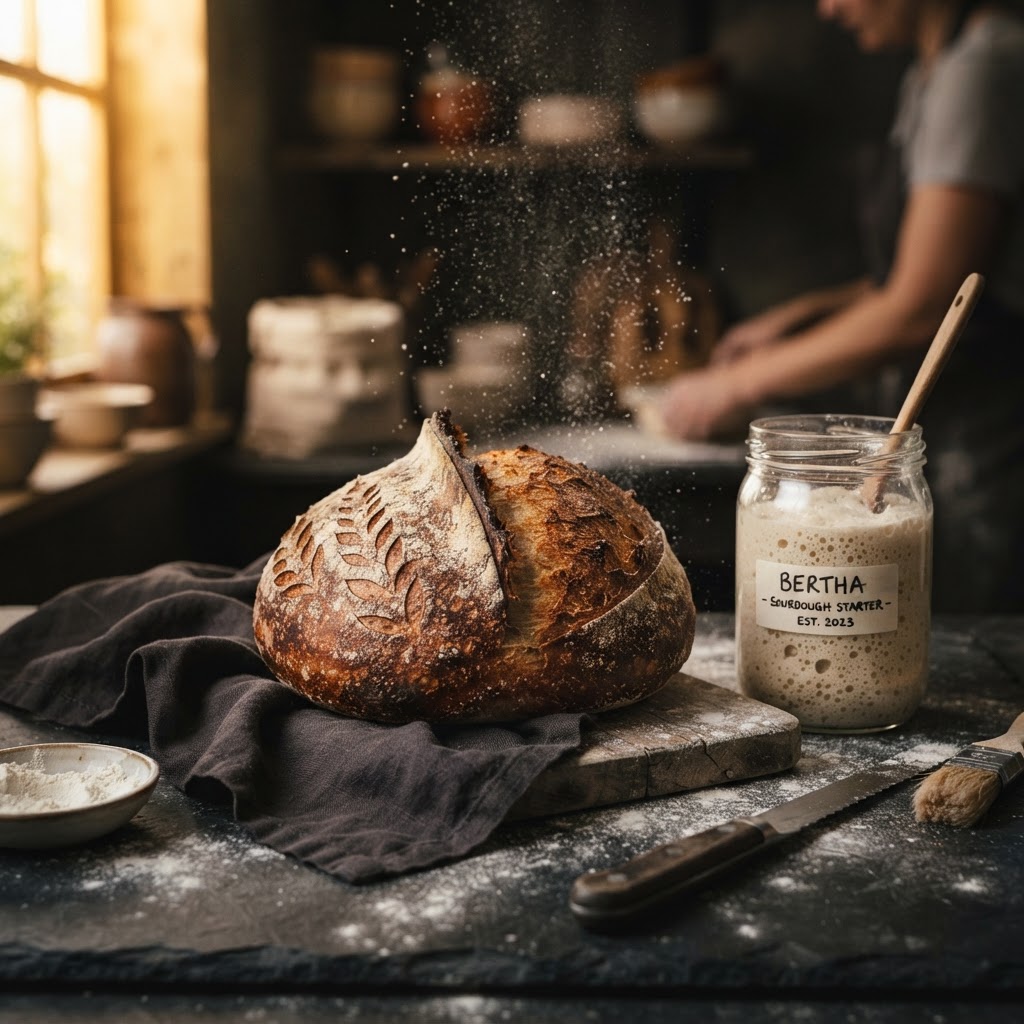
Sourdough is ranching, not baking
The difference between bread and sourdough bread is that sourdough is alive before the dough ever exists. A starter is a managed colony of wild yeast and lactic acid bacteria living in a jar of flour and water. You do not make sourdough, you farm it: you feed the colony, read its behavior, and schedule your baking around its appetite. In exchange, the colony leavens your bread, flavors it with acids no commercial yeast can imitate, and protects it, because a properly sour starter is acidic enough that spoilage organisms cannot gain a foothold.
That living ingredient is why sourdough fails differently from yeasted bread. The fixes are known, but they start one step earlier: the loaf is the second troubleshooting table in this guide. The first is the jar.
What is actually in the jar
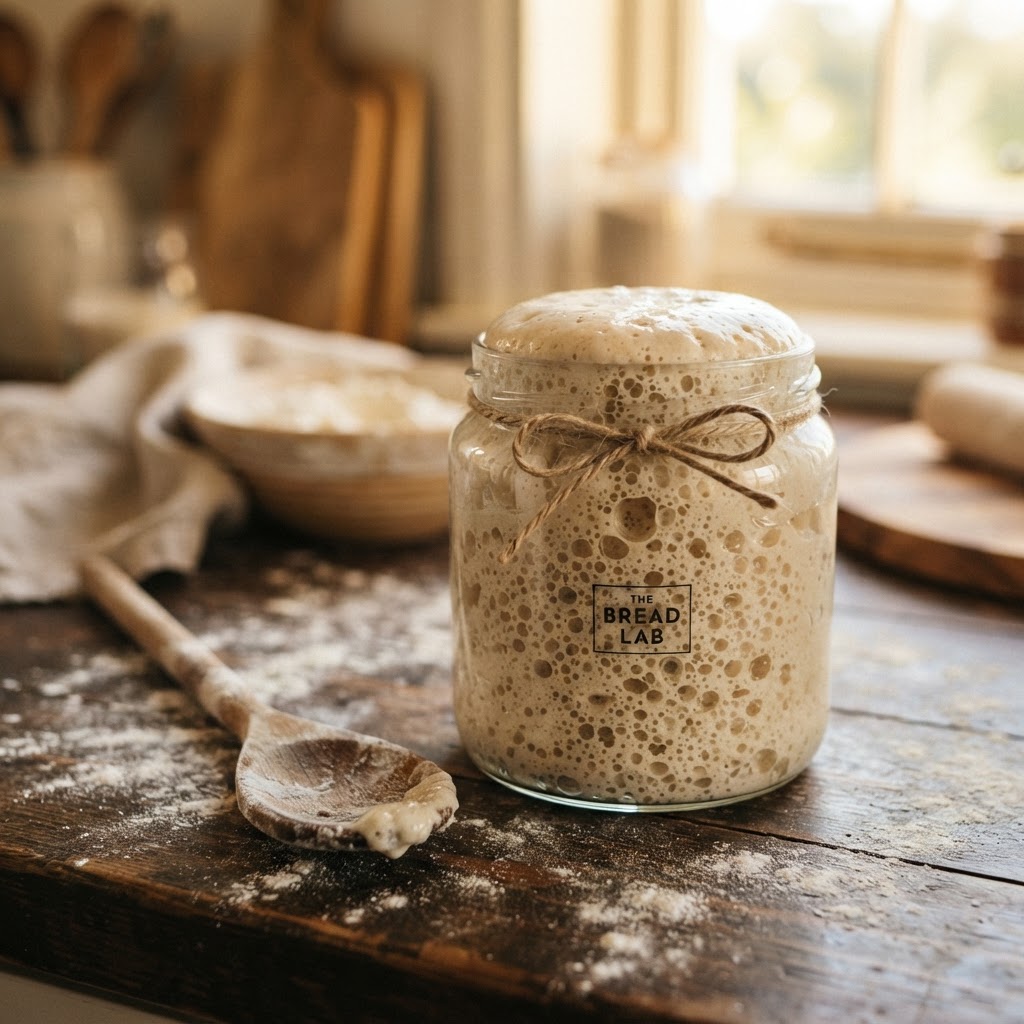
Two populations share the starter. Wild yeast consumes sugars in the flour and produces carbon dioxide, which leavens dough. Lactic acid bacteria, usually several species, outnumber the yeast and produce the acids: lactic acid, the round, yogurt-sour note, and acetic acid, the sharper, vinegar-like edge. The balance between those two acids is the sourness of your bread, and it is controlled by temperature and feeding rhythm, not luck.
The acid is also the safety system. A healthy starter sits well below pH 4.5, acidic enough that harmful bacteria cannot compete. The colony you are feeding and the flavor you are tasting are the same system.
Starting a starter: the day-by-day
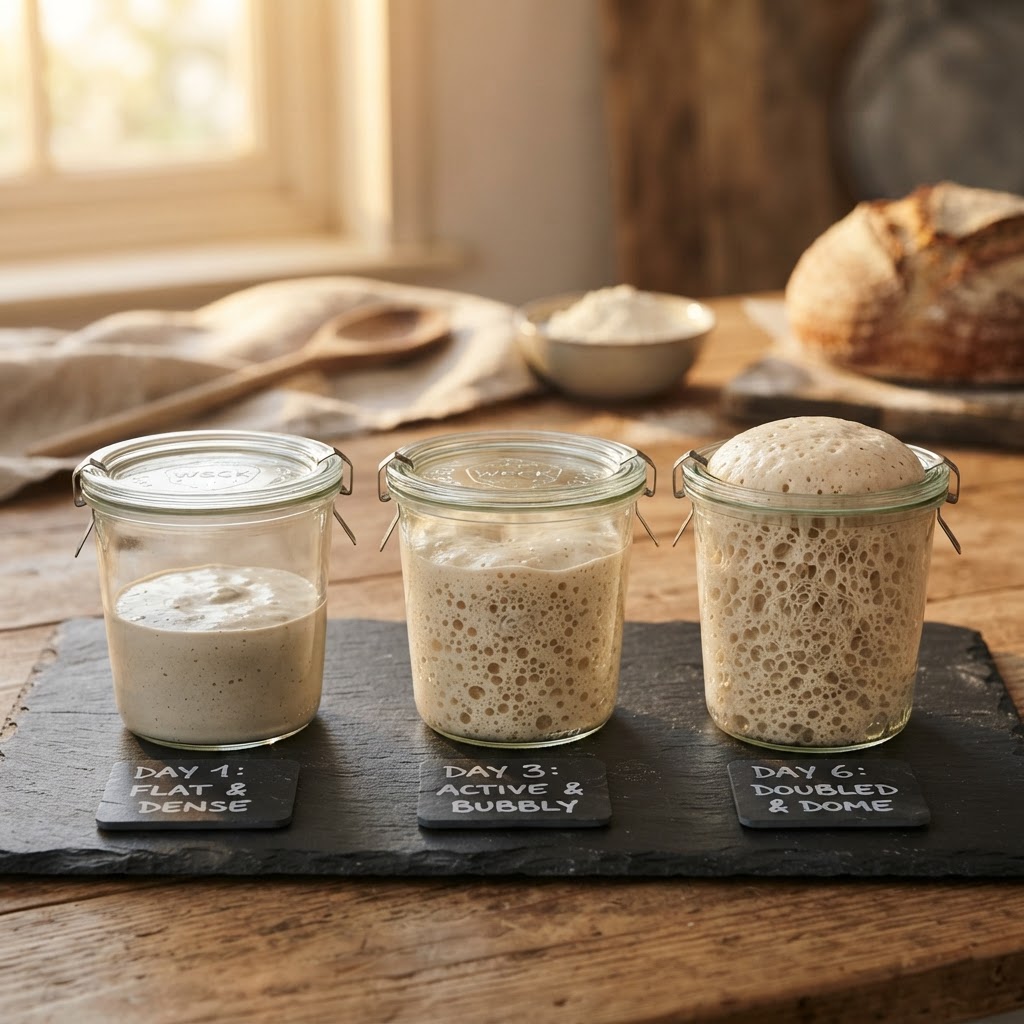
Mix 60 grams of whole-grain flour, rye is the reliable accelerator, with 60 grams of water in a jar. Stir daily. Then feed by discarding all but a tablespoon and adding fresh flour and water in equal weights. Expect this timeline:
| Day | What you see | What is happening | What to do |
|---|---|---|---|
| 1-2 | Nothing, or a few bubbles | Bacteria colonizing the flour | Stir daily, wait |
| 3-4 | Big bubbly rise, then it dies by day 5 | The false rise: a wave of Leuconostoc bacteria, not your yeast yet | Do not quit. Keep feeding. This collapse is a famous false exit |
| 5-7 | Quiet, then slow real activity | Wild yeast and lactic acid bacteria establishing | Switch to a daily discard-and-feed at equal weights |
| 8-14 | Predictable doubling within 6 to 12 hours of feeding | The colony is mature | It is ready when it doubles reliably two days in a row |
Warmth before flour
A starter that never takes off is almost always a temperature problem. The colony wants 70 to 78 degrees F. Cooler than that, everything above simply takes twice as long, so before blaming the flour, warm the room or set the jar near, not on, a warm appliance.
Reading the peak
Bread wants the starter at its peak: domed, doubled, airy and webbed like a sponge, and smelling clean-sour, of yogurt or green apple. The float test is the field check: drop a spoonful in a bowl of water, and at peak it floats, held up by its gas. A starter that has risen and fallen is past peak, still usable, but weaker and more sour.
Feeding ratios: the two dials
Feeding rhythm and ratio are the two controls on the whole system.
| Feeding | Ratio, starter to flour to water | What it is for |
|---|---|---|
| Maintenance | 1:1:1 by weight, once daily at room temperature | Keeps a balanced, moderately sour starter |
| Strengthening | 1:2:2, once or twice daily | Builds rising power in a sluggish starter; the colony outgrows its acid load |
| Reviving a neglected jar | 1:5:5, then normal feedings next day | Rebalances a deeply acidic or hooch-covered starter |
| Fridge storage | Feed 1:1:1, refrigerate, feed again before use | Pauses the colony for up to a week between bakes |
The starter diagnostic table
Find the symptom, apply the cause, keep the fix for the next feeding.
| Symptom | Probable cause | Prevention or fix |
|---|---|---|
| Gray-brown liquid layer on top, smells like beer or nail polish | Hooch: the colony ran out of food and the alcohol separated | Pour it off, feed now, shorten the interval or raise the ratio |
| Doubles fast then collapses within hours | Too warm, or fed too small a ratio | Move to a cooler spot, feed 1:2:2 |
| Never doubles after two weeks | Cold room, or flour with too little for the colony to eat | Warm to 75 F, and feed part rye or whole wheat; the minerals and microbes in whole grain are starter food |
| Smells sharply of acetone | Acid accumulation between feeds | Feed more often, or discard down to a tablespoon and feed 1:5:5 |
| Smells like gym socks or old cheese | Bacterial imbalance, acetic overgrowth | Discard all but a tablespoon, feed 1:5:5 with rye for two days, keep warm |
| White film on the surface, wipes clean | Kahm yeast, a harmless air-borne visitor | Wipe it off and feed; it is cosmetic |
| Orange, pink, green, or fuzzy colored patches | Mold, and the colony has lost the safety war | Discard entirely, start fresh, and check the kitchen temperature |
| Float test fails but it smells healthy | Tested off-peak | Catch it at peak, 6 to 12 hours after a feed |
The loaf: a working schedule
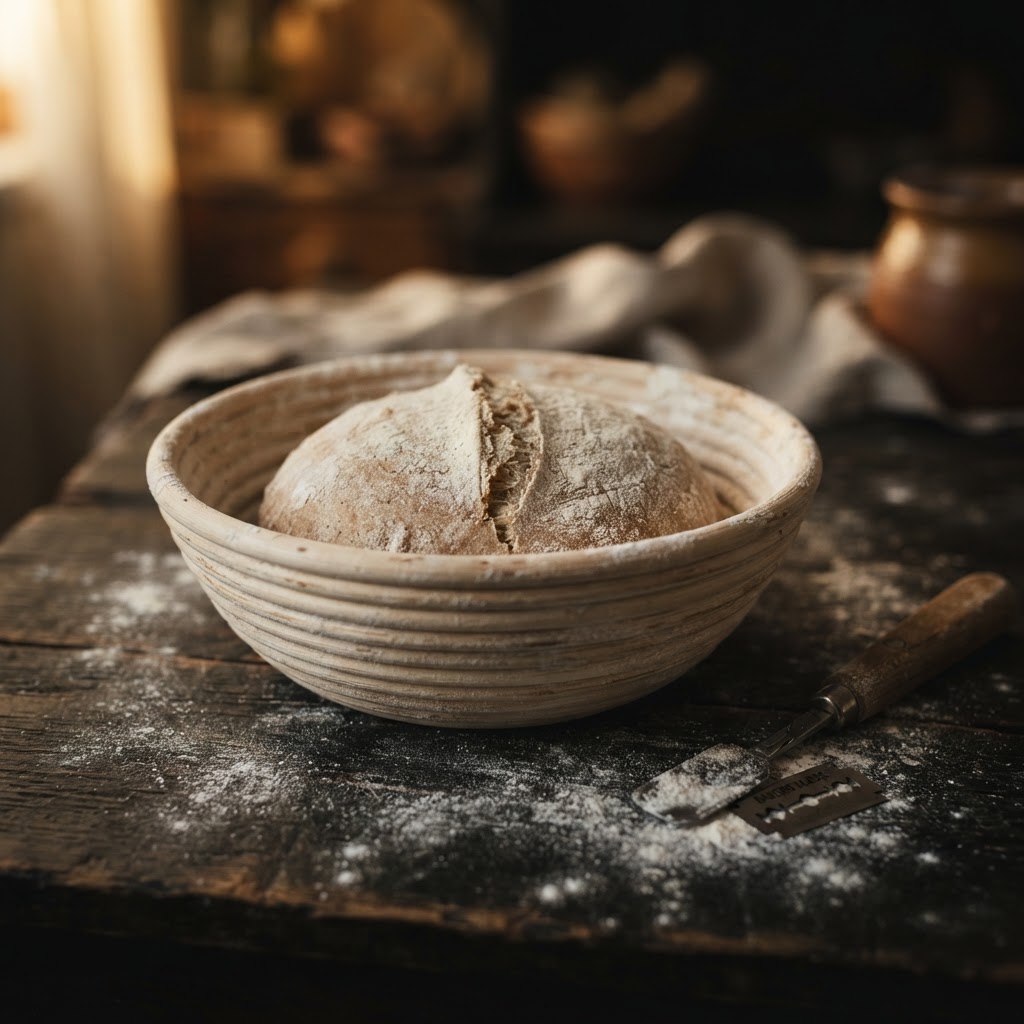
Troubleshooting presumes a baseline. This is the schedule the diagnostic table assumes, a 75 percent hydration dough at a warm room temperature:
| Step | What happens | Timing |
|---|---|---|
| Feed the starter | The colony reaches peak | 6 to 12 hours before mixing |
| Autolyse | Flour and water rest, no starter, and the flour hydrates and its enzymes begin relaxing the gluten | 1 hour |
| Mix and fold | Add starter and salt, then stretch and fold four times over 2 hours | Bulk fermentation begins, 4 to 6 hours total |
| Shape | Tension built on the surface, seam underneath, into a floured basket | After bulk, when the dough is puffy and jiggly |
| Cold retard | In the refrigerator, flavor builds and scheduling becomes flexible | Overnight, 8 to 16 hours |
| Bake | 450 F in a covered Dutch oven for 20 minutes, uncovered 20 to 25 more, to an internal 205 to 210 F | The lid holds the steam that lets the loaf spring before the crust sets |
The loaf diagnostic table
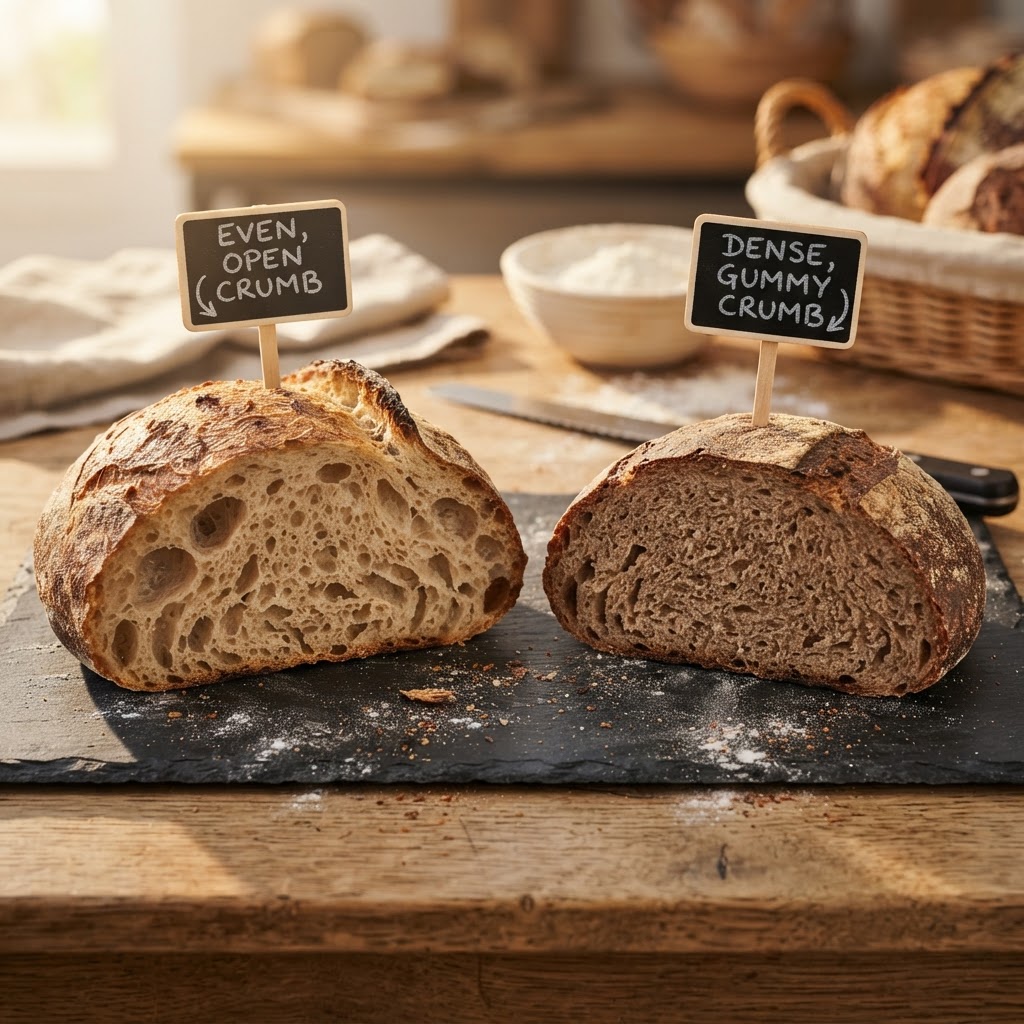
The loaf reports on the whole process. Read it the way you read the jar.
| Symptom | Probable cause | Prevention or fix |
|---|---|---|
| Dense loaf, tight crumb, small domed shape | Under-proofed, or starter used past peak | Longer bulk, warmer room, and always at-peak starter |
| Flat loaf that spread sideways | Over-proofed, or shaped with no surface tension | Catch the dough puffy, not sagging; build tension in shaping |
| Big tunnels up top, dense layer at the bottom | Under-proofed and shaped too loosely | More bulk time, tighter shaping, and let the shaped loaf pass the fingertip test |
| Gummy, sticky crumb even when cold | Under-baked, or sliced while hot | Bake to 205 to 210 internal, cool fully on a rack; under-fermentation also leaves gumminess, so check the bulk window too |
| Sourness barely there | Everything ran warm and fast | Cold-retard the shaped loaf overnight, and try a firmer starter kept a day in the fridge |
| Sourness aggressive, vinegar-sharp | Acid built up in the starter, then warm acetic ferment in the dough | Feed the starter 1:2:2 before the bake, keep bulk at 76 to 78 F |
| Blew out the side or seam | Under-proofed, or the score was too shallow | Proof to the slow spring-back fingertip test, score a quarter inch deep at a shallow angle |
| Pale crust | Steam never left the pot | Remove the lid at 20 minutes and let the crust brown |
| Thick, hard crust | Baked too long, or too low | 450 F, covered 20 minutes, then watch the color, not the clock |
| No open crumb at all | Everything rushed: peak missed, bulk short, hydration low | The crumb is a fermentation report card. Slow down, stay warm through bulk, and weigh everything |
The proof test that replaces the clock
Over- and under-proofing cause half the table above, and the dough answers by feel. Press a fingertip a half inch into the shaped, cold loaf. Spring back instantly and the proof is short: wait. Hold the dent with a slow, partial spring: bake now. Stay dented: it is over-proofed, bake anyway and lower expectations, then shorten next time.
One clean safety line to close: a healthy sourdough culture is protected by its own acidity, so the only true discard cases are visible colored mold or an off, putrid smell. Everything else in this guide is a management problem, not a hazard, and every management problem in the jar has a known fix in the tables above.
SavorovaS is an Amazon Associate. Some links on this page are affiliate links, and we earn from qualifying purchases. We recommend products based on professional kitchen practice, not on commission.
Cook with Savi